• HOME
  • SHOP
    • SHOP ITEMS
    • CART
    • CHECKOUT
  • PORTFOLIO
    • GALLERY
    • SLIDE SHOW
    • PROJECTS
  • BLOG
  • TOTAL BLAST
  • ABOUT
    • PROFILE
    • BACKSTORY
    • WORKFLOW
    • NEWS LETTER
  • HIRE ME
  • CONTACT
Art, designs, illustrations, text and content © 2025 BenKrefta.Com

Art Theft: The Story Continues

by Ben October 19, 2018 in Art Talk 0 comments tags: art theft, artist

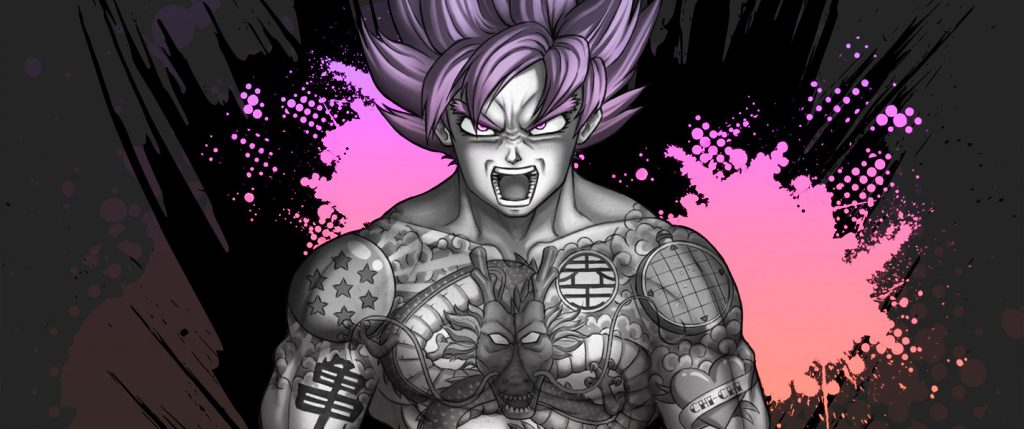
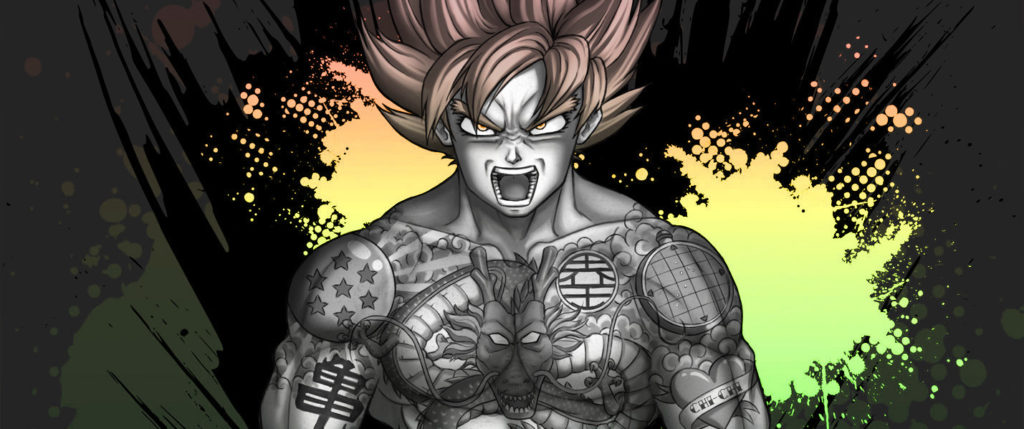
Goku banner3

What can you do about Art Theft?

Following on from my posts: 'Art theft and stealing images online' and 'Art theft and further criticism of pod sites', I’m raising awareness of online art theft, while battling against sites who have taken and used artwork from me personally, along with hundreds of other artists, without permission.


Deviant Art artist's thoughts on Art Theft:

I mentioned my plight on the DeviantArt forums - asking the world's biggest art community how can I/we, as artists, can stop this?

The general opinion was to not upload high quality images on to the net and use watermarking to at least help prevent this. Fair enough advice, and something I'd already started doing anyway. But it was interesting to find many of the replies indicated that they felt the onus was on the artist to minimise the damage beforehand and if the damage had already been done, then tough luck. There was a lack of criticism or interest towards the companies/individuals that steal. Same goes for the sites which allow thieves to sell artist's stolen goods on their platform, or the fact that these platforms (e.g Facebook, Instagram, Aliexpress, Amazon, Ebay) make it difficult to either report cases of copyright infringement or do very little, if anything, to act upon it.


Stealing is not acceptable - offline or online

Sure, there are ways for an artist to minimise the chance of their work being stolen and used by third parties, but if that fails, then what? We sit back and allow crooked individuals or companies to take our images to profit from while perpetuating the idea that if it's already on the internet it's free game? And should the artist be seen as the one at fault in such cases when they are ultimately a victim of the crime? You can make your home more secure- lock the doors and install a burglar alarm, but if you are still burgled anyway, there is at least a police force in place whose duty it is to investigate and hopefully apprehend the criminals responsible. Online there should be a similar system or authority in place...

Well, there is. But you've got to pay for it. One forum member pointed me at the DCMA - The Digital Millennium Copyright Act which works though a business, whereby if you pay them $199 they will initiate a take-down request to have your content removed from an offending site. For small scale theft this is obviously too high a price to pay. Especially if you're an independent artist living on a tight budget as it is. Plus what happens when another site or seller pops up and uses your image? Do you pay yet another $199 to get that one taken down too?


Spotting Stolen art isn't difficult, yet hard to take action against

It shouldn't be hard to to get offending content taken down- I have a reputation, can prove I created it and have the original Photoshop files or sketches to boot, meanwhile I know for a fact the offending art thief does not have these, and would fail, if asked to produce any kind of written agreement stating permission to use the content in question.

And then you just have to look at what else these jokers are selling to put things into context- a jumbled mix of artwork produced in wildly different styles (and arguably of different artistic abilities). These are obviously created by a wide range of artists with no mention where the artwork was sourced from. They're poorly edited or Photoshopped on to products. Sometimes still retaining the artist's signature or watermark, which is typically removed if legitimately licencing art to third parties. And it's being sold from China through unofficial channels and we all know China doesn't take piracy particularly seriously.


The internet is a risky place for artists and creators

So as it stands, according to some artists, the blame seems to be primarily with the artist themselves. If you're a small independent artist being ripped off online, you often can't do much about it. The DCMA is there if you don't mind forking over $200 for help.

In a ideal world, perhaps there would be some kind of block-chain system whereby the rights to every image, film or piece of music could be traced back to a registered owner. This information would be embedded into the file itself, with a registry of previous owners being attached to each file. Might sound like a crazy idea, and I haven't spent too much time thinking about how logistically possible such a system would be, but surely help with digital piracy of images, music and video?
Leave a Reply

New Artwork added to the Shop

by Ben June 07, 2018 in Art Talk 0 comments tags: art, buy, prints, sales, shop, store

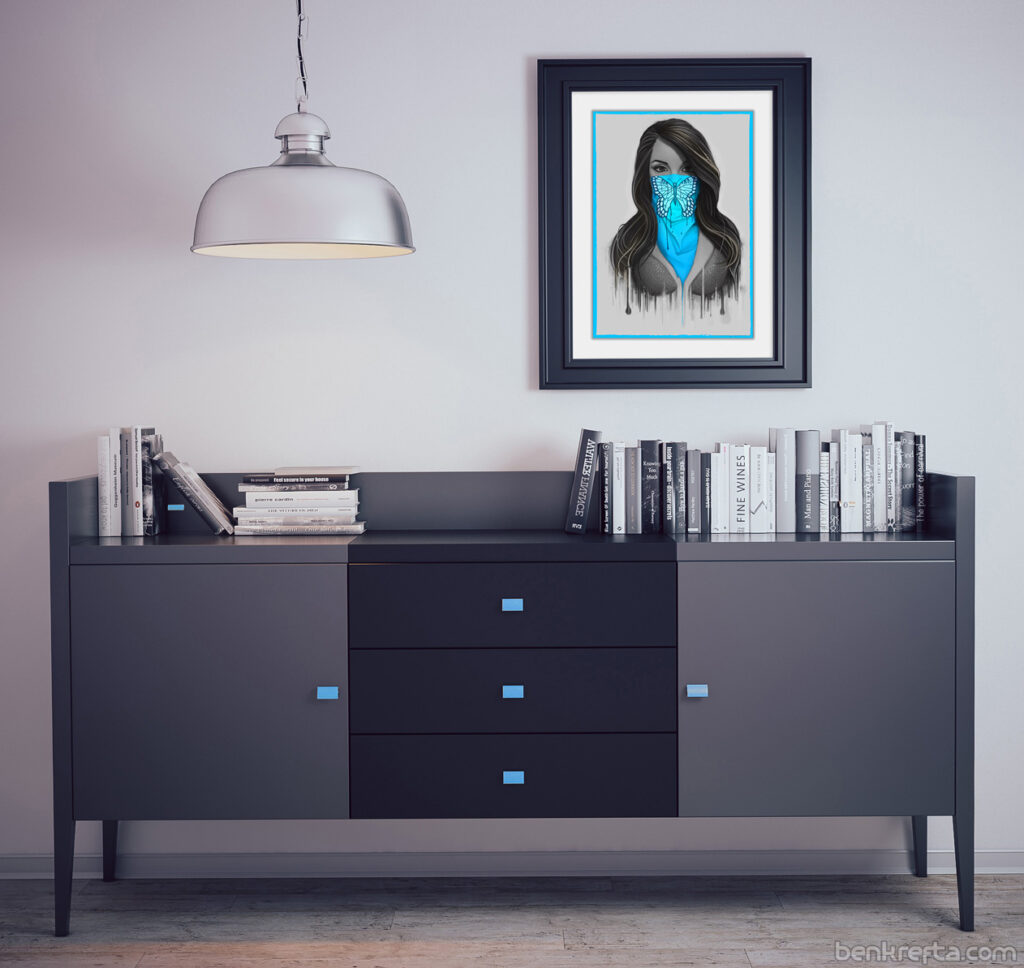
Awesome Artwork in Room


Someone on social media asked how the could buy me a coffee (donate) to support what I do. Like any artist, I really appreciate any support from those who like my work.

1. Decorate your Walls

The best way to support would be to buy some signed artwork from the shop plus you'd have something cool to show for it. I've added a few new prints including my Alita and Harley Quinn marker pieces.

2. Hire Me

And if you want some custom-made artwork, check out the Hire Me section for more info. I often have many projects on the go so am not always available to hire, but if you catch me at the right time and have a fun project you'd like me to work on, I'll definitely take a look.

Leave a Reply

Adding New Art – When to post it online

by Ben March 15, 2018 in Art, Art Talk, Blog 0 comments tags: art, artwork, drawing, phostoshop, robot

Robot Cry

When to update an online gallery?

Sometimes I'll create a sketch or two, other times more finished artworks, but most of the time I don't add these to my main gallery.

I'm trying to reserve the gallery for my top 30 or so works. It's never easy to know exactly which art to include in my portfolio. How can one judge when a work's quality or relevance trumps another? I've attempted to curate my portfolio as best I can based on personal feelings, but it might be an idea to get an outsider opinion on these things also?

For now I use this Blog to update with other bits and pieces I'm working on. Even on the blog, it can be tricky to know if something is worth posting. I draw little doodles and crappy sketches often, but don't necessarily want to post every little thing I do. Plus I don't want to feel I'm contributing the internet's archive of never-ending, pointless content!

For some reason I think about this a lot! There's so much stuff on the web, so what is actually worth posting online?


To build an audience I'm supposed to post regularly, non-stop

For many companies, organisations and individual artists the idea is to post often to help build an audience. As with brand recognition, you post regularly; supplying a stream of content in order to become a fixture in the the lives of your online followers. It takes time for people get to know what you're about. But, eventually, you build some kind of online relationship, gain a following, receive kudos and potentially generate income.

For independent creators it can be difficult to post regularly by creating enough finished content worth sharing. Attempting to facilitate this necessity can become stressful.

So on the one hand I feel like I should throw up some rough sketches or incomplete drawings, since posting something is considered better than nothing. On the other hand, I don't want to litter the web or my sites with valueless (in my opinion) posts just for the sake of posting. Plus, to be honest, I don't like the pressure of feeling like I have to keep posting updates online.


I wish blogs didn't go out of fashion!

I'd be happy to post more on my site's blog (here) since I have a chance to go into as little or as much detail about what I'm doing or thinking as possible. However 99% of my audiences are mostly on social media - primarily Instagram. Despite having tens of thousands of followers, Instagram's format isn't really suitable for more than a square image post and a line or two of description. I don't like it.

One thing I do know is, unless this blog was to get more attention, it's hard to justify spending too much time posting here as often as I'd otherwise like. Therefore, for now, I don't.


Crying Robot Tears

While I don't intend on Blogging every other day, and while I have decided I don't want to post absolutely every sketch or mark I leave on a sheet of paper, I did want to share this a piece I'd been wanting to rework for a few years:

The Photoshop screen shot above shows the original concept on the left, and the update on the right. I had this idea to create a narrative scene showing the sad robot guy cradling his dead owner/lover/?, while facing a gun to his head. What lead to this event I wonder? What will happen next?


One for the Blog

It's a little sketchy and unrefined but I think I'll leave it as it is for now. Not all ideas or art needs to be polished to perfection. For those works, they can live here in this blog.

Leave a Reply

FAQ

by Ben December 21, 2017 in Art Talk, Thoughts 0 comments tags: #arttalk, faq

benmangaFAQFrequently Asked questions...

I'm now at a point where it sometimes gets tiring re-writing the same answers to the same questions week after week. Despite answering the same questions on social media so often, they they still keep coming up again and again. Unfortunately that makes me suspect this post might go unnoticed also!

I don't want to ignore messages and comments, so will always courteously reply, but I'm sure I'm not the only artist who's bored of answering the same old questions like "Can you draw me a picture of X?" and "How much do you charge for art?".

I'll answer the questions with the same response I give to those who have asked in the past as well as comment (or perhaps moan is the right word? ha ha) on the question itself in italics.


How much do you charge?

BenKreftaLogo

I'm honoured to know you like my work enough to want to commission me. I will need to know exactly what you want created before I'm able to give a price. For example a pencil sketch of a head will take considerably less time and therefore cost less than illustrating an entire book or creating 6 months worth of video game assets. The Hire Me page on this site was created to answer this question and give customers an understanding of how to commission artwork from me.

Please appreciate this question gets handed to me at least once a week so can't help let out a sigh every time! Imagine asking a builder "how much do you charge?" to build a house. It could be inexpensive if you only want it for your kids to play in or dog to lay in, or it could cost tens of millions if it needs dozens bedrooms of and 20 bathrooms! Or what about walking into a restaurant and asking "how much do you charge?". There's going to be a big difference between a side salad and lobster dish, so surely most people would at least ask if they have a menu if not specifying, for example, "how much do you charge for a salad"?

I appreciate it might seem like a genuine query and perhaps wrong of me to expect the potential customer to consider an artist's services don't carry a single value e.g. £100. And, unlike a restaurant, a menu of prices is difficult to create when you're an artist like myself who posts/ advertises/ is able to create a wide range of different types of art. However it has become evident that the vast majority of potential customers asking little more than "how much do you charge?" aren't particularly serious about commissioning work to begin with and/or wouldn't be prepared to pay my prices anyway. The serious ones have already done the sensible thing of researching me on this site (perhaps arriving here via the link in my bio on social media sites) which can answer most preliminary questions before continuing to contact me. When clients write an introduction, a brief and specifics with politeness and etiquette I'll sit up and give the request the attention it deserves :)


What materials do you use?

BenKreftaLogoMostly Photoshop CC software with a Wacom Cintiq 27QHD graphics tablet. I'll occasionally use pencil, ink and markers for traditional work.
  1. I've likely already posted #photoshop and #cintiq in the description on social media art posts, yet people still ask on these posts what I use. I do wish people would pay more attention.
  2. I think a lot of people are looking for expert insider information with this one to help give them the edge, but does it really matter what I use? You can achieve similar results to most things I create with dozens of different software or traditional media, so much of the time it comes down to personal preference and my methods may not suit other people. It's strange that most other artists also list this as a most frequently asked question when there are so many other important or interesting questions that could be asked.
  3. I've written art tutorial books which discuss tools of the trade in far more depth than I can cover in a reply online, so better just to buy those- they're reasonably priced and not going to break the bank.


Can you draw me a picture for free?

BenKreftaLogoSorry. I'm too busy with work and commissions.
There's a few reasons why I wont do this:

  1. I feel it's disrespectful to ask an artist or any professional to work for free. It's like walking into a hairdressers and asking for a free haircut. 
  2. Like most creatives, I have so many ideas for things I'd like to create that I don't have time or want to devote mental energy to focusing on someone else's project (unless compensated).  I especially wouldn't have time if I'm spending vast amounts of my life drawing pictures for anyone who asks.
  3. Giving away freebies would be unfair to customers who have happily paid me to have artwork created for them in the past or will do in the future.

Does anyone ever actually say yes to this request? I would imagine every artist gets asked this question all the time and I'm sure we all face-palm every time.


How long have you been drawing?

I'm in my mid thirties so quite a long time. Read my Backstory for more info.


Can you give me some art tips?

BenKreftaLogo

I'd rather aspiring artists buy and read my How to Draw Manga books (in this site's Shop or via Amazon) which gives hundreds of tips. If you've read my books cover to back I guarantee you'll learn something new and anything needs more clarifying, let me know and I'm happy to help as much as I can.

I know everyone's looking for a free education, but sometimes putting your hand in your pocket and investing just a small amount in a tutorial book can be such a time saver. I also think if you've paid for information, you're more likely to take on board what's being said plus I'd feel happier to see people using what I teach in the books than me handing them some general advice on social media which wont stick or be sufficient to make people want to sit down, try a new technique and feel inspired to create.


Can you tell me how to become a pro artist?

BenKreftaLogo

I don't have a good answer to this one. Every artist will need to find their own way to success. I'm not deliberately trying to be vague, but it would be impossible for anyone to replicate what I did to established myself. Why? The internet was still in it's infancy when I started out. Opportunities to promote yourself online were quite different than they are today. Plus luck had a lot to do with it.

For now I'd advise just working hard on improving your portfolio and skills, start small and work your way up. So far as Social Media goes, I will say, unless you're work is phenomenal, simply creating a Facbook page or other social media account and posting up art once a week isn't going to be enough to secure any work on it's own.

You'll need to devote a lot of time and energy to marketing yourself and making others aware that you and your awesome, unique art exists. That might involve interacting with other people's content, liking, following, sharing and being a good online-citizen in hope of reciprocation, or finding a use for your services within communities you're involved with, both on and offline.

Leave a Reply

My Work Space / Desktop Area

by Ben September 01, 2017 in Art Talk 3 comments tags: cintiq, desktop, specs, studio, tech, work area

[gallery columns="2" size="large" ids="3013,3012"]

Thought I'd share a few pics of my current work space at my studio. It looks a little something like this.

I've got my trusty Lenovo Laptop to the left, and a Wacom Cintiq graphics tablet to my right which is attached to a Ergotron arm- this means I can keep the Cintiq in a floating position for general surfing and writing, then re-position and tilt it down onto on the desk. I have a custom large mouse mat for the desk to match the canvas I drew on the wall- the main reason is to stop the bottom of the tablet getting scratched or damaged on the desk when I push it in place. The black gel padded mouse mat supports my wrist.

I use 'Smudge guard 2' when working on the tablet to prevent smear and reduce friction and often wear a pair of crystal Gunnar glasses which provide a small degree of eye relief when staring at the screen all day.


Tech / Spec Summary:

  • Lenovo Y500 15.6" Notebook:
  • i7-3632QM 2.4GHz Processor
  • 16GB 1600mhz DDR3 RAM
  • NVIDIA GT650 Graphics
  • 1x speedy 2TB Hard Drive for data, 1x 250GB Solid State Drive running Windows 10 Operating system
  • An external 1TB 2.5" overflow drive for movies and less frequently used data, an external 5TB drive for backing up [Located at home]
  • Ergotron LX Arm
  • Cannon LiDE A4 scanner [Located at home]
  • Epson Stylus 1500W A3+ Deskjet printer [Located at home]
  • Wacom Cintiq 27QHD Touch Graphics Tablet
  • Microsoft Wireless Mobile Mouse 6000
  • Logitech 2.1 Speakers
  • Additional Web Cam: Microsoft LifeCam HD-3000 [Not in photo]
  • The mounted Microphone is a Samson C01U


My Laptop is now 4 years old, and I'd usually consider upgrading it after this amount of time, but I'm finding it hard to find something drastically better for an affordable price. Anyone use a Mac Book pro? I've seen a similar spec model to my current laptop, be it with a better resolution screen, but it's 3 times the price. I couldn't imagine the upgrade being worth it. I'll no-doubt stick with what I have for a few more years to come then reassess my options. As much as I hate Microsoft, I'm familiar with Windows OS on a pretty deep level, so will likely stick with it also. And does anyone own an A3 size scanner? I'd like one but they are so expensive compared to A4. Other than that I'm pretty content with my current set up.

If anyone wants a non-bias opinion on any aspect of the above tech or set-up, leave a message and I'll add a follow-up comment :)

Leave a Reply

Art theft and further criticism of POD Sites

by Ben July 14, 2017 in Art Talk, Thoughts 0 comments tags: art theft, artist

Goku banner2

POD = Print on demand. A service that prints art and designs on products on an individual basis rather than batch printing in greater quantities.


Check out my 'Art theft and stealing images online' post if you've not done so already. I'm trying to make people aware of the fact that all of the artwork floating around on the web is property of the person who created it, unless a license or rights transfer has taken place. If transfer of ownership is NOT the case, or permission has NOT been given by the owner, such work should NOT be used for monetary gain by third parties. 

However it does get used and I suspect more art is profited from illegally than legally and that's not something to be ignored!


There is a big problem with online art theft

The internet has so much momentum that re-inventing it in order to protect victims of online crimes can't happen overnight. And I worry that necessary laws and measures will never be put in place to protect artists.

Perhaps in decades to come a block-chain style' meta data attachment' to all digital content including images will come in to place? Or a system whereby digital data can be traced to it's origins while leaving behind records of every time that data has changed hands, been bought/sold and so on? Such a system would at least prove ownership in disputes. And personally I don't have a problem with people printing off an image for their bedroom wall, using it in an online avatar or generally small-time, non-profit, personal or private use.

It's directly profiting from another person's efforts which I find so repulsive. It's something that these unscrupulous individuals or companies should not be allowed to get away with. Artists can take steps to help safeguard themselves by being aware of the issue and making sure to reduce the resolution of their files online or watermarking. The art they display might not look as pretty but it's an option.


Are you the type of artist effected by theft?

To quote Snazzygaz - a designer on DesignbyHumans (an online POD t-shirt store.):

"I’m not exaggerating when I say I believe almost every single listing on DBH and Redbubble has been scraped by what I believe to be an automated chinese operation and being applied to products there for sale on Aliexpress and the like and as a consequence listed against official listings on Amazon, as well as Spreadshirt and potentially more PODs.

These people are not only stealing straight from the artists but also the legitimate PODs like DBH by offering the “same” product much cheaper and with inferior quality on what looks to the average person like an official outlet via Amazon and the like, they’re taking money out of your hands by DIRECT sale and pushing inferior quality work which severely dampens the average public opinion about what the company offers.This is like the most criminal shit I’ve seen relating to copyright theft and counterfeiting and it’s absolutely insane."

It seems there are a few of us that are aware of this issue, but unfortunately not enough. I feel both artists and authorized retailers of their art and designs do not take this issue at all seriously enough.

I know some artists who have a much more relaxed attitude towards piracy and art theft, They''ll and accept and allow the occasional small-scale rip-off to take place, passing it off as an inevitable reality of sharing content on the internet.

A top-tier professional, with an endless supply of high-paying assignments, commissions or sales may be able to get away with looking the other way, or not feel triggered into doing anything about art theft, but the art game is tough and the last thing artists should want is to compete against their own stolen artwork and living in a world where this kind of thing is allowed to happen.


What does Print on Demand art seller Society6 think about art theft?

Some of my art was harvested from Society6's own platform. I contacted Society6 to see if there was anything to be done about my stolen artwork being illegally used by other online retailers. 

"Hi there, I've found my artwork which I had submitted to Society6 having been taken without permission and sold by Chinese retailers via Aliexpress.com. Would you be able to assist in getting these products removed from Aliexpress?

Artwork in question: [Link to Artwork]

Instances of it being used without permission by sellers outside of Society6:
[https://www.aliexpress.com/item/Dragon-Ball-Tattoo-children-s-T-Shirt-Pure-Cotton-Short-Sleeve-O-Neck-Tshirt-Tees-Boys/32797095017.html]
[https://www.aliexpress.com/item/T-Shirts-Free-Shipping-Saiyan-Dragon-Ball-Tattoo-Men-s-Organnic-Cotton-Shorts-T-Shirt-2017/32816945296.html]
[https://www.aliexpress.com/item/Dragon-Ball-Tattoo-T-Shirt-XXXL-Short-Sleeve-Custom-Men-s-Clothes-Fashion-Street-Wear-Cotton/32815144101.html]

It's also been stolen by Hoodietime: [https://hoodietime.com/collections/dragon-ball-z-3d-hoodies/products/dragon-ball-super-z-super-saiyan-blue-tattoo-goku-hoodie-pullover-3d-hoodie].

I have contacted Hoodie time asking to remove it and still awaiting response.
I have submitted a report on each of the Aliexpress items, but was told there is not enough evidence that I created the work. I hoped that S6 would be taken more seriously than a single artist like myself.

Regards

Ben"

Society6's reply:

"Hi Ben, Thank you for contacting Society6 Support. Unfortunately, Society6 has no legal standing in this matter. So we are unable to contact the websites in question.

As the copyright owner, it is your responsibility to contact the infringing party. We are unable to provide legal advice and recommend you seek counsel if this matter persists.

We are sorry we are unable to help any further. Thank you for your continued support.

Sincerely,
S6 Legal Team"

I didn't expect help with this, but thought it was worth a shot and would at least make S6 aware of yet another instance that this practice is still taking place. The trouble with S6 for example is that they require high-resolution files for their products and don't protect the artwork used on these items (as of 2017). The art uploaded by artists and designers to POD sites should be automatically scaled down and watermarked making it harder to steal and make use of while keeping the original submitted clean, larger images stored offline and completely inaccessible to scrapers (people or systems which extract content from the net to then make use of). If POD sites aren't doing this then they should have a responsibility to help resolves these cases.

If I effectively licence a design to S6 and the design is stolen from S6, I would argue that theft was due to negligence on their part. And after-all, if for example 1000 S6 or DBH designs get scraped and added to shirts and sold elsewhere, S6 and DBH lose out too. More so, since they often take a larger cut then the designers.

Leave a Reply

Art Theft and Stealing Images Online

by Ben July 06, 2017 in Art Talk, Thoughts 0 comments tags: art theft, artist

Goku banner

I would guess that most (more than half, but possibly 90%+) products that display art and designs of which are sold on the internet (as well as comic conventions) are counterfeit, illegally unlicensed, infringing copyright or stolen from artists without permission.

The state of affairs regarding stolen artwork on the internet is ridiculous. An epidemic one person on their own, or even thousands together could never hope to even reduce by a tiny amount. To say this upsets me and to attempt to make people aware of what's going on here seems like a wasted effort while the sounds of a thousand virtual cash registers ring from the profits of stolen art every second of the day!

I don't even look for it, but I see it all around me. I often recognize my favourite artist's work being used on questionable products by relatively unknown online marketplace retailers and know a lot of the fan art and concept art I see isn't being licensed to certain low-grade knock-off merchandisers. Instead it's simply been saved off of the internet and slapped on top of a product...

And then it happened to me. I did a reverse image search on one of my works to find it for sale by three different Chinese retailers on Aliexpress and two other separate T-shirt and apparel stores! I'm attempting to get these works taken off, but it's not always easy. Stores often ignore or don't seem to take these kind of complaints seriously~ so long as they're making money and aren't getting an official 'cease and desist' letter through the post, they'll carry on profiting from a stolen work, while the original artist gets a zero percent share of the income it generates.

To help combat this in the future I've spent a few hours lowering the resolution of each image in my portfolio on this site. They should still look fine, but originally I was hoping to future-proof by posting larger sized images as screen resolutions continue to get bigger and that's something I won't do anymore. I've also applied watermarks to the bottom corners of selected works. The only trouble is, I can't stop people stealing 'without watermark' images I've already supplied added to my online 'print on demand' stores such as Society6 and DesignbyHumans :(

I appreciate that most buyers wont even consider there could be an issue with the items a shop has to sell, but I just ask that before you buy a print, t-shirt, mug, key-chain, etc, please do you best to find out if it's legit and make sure you're not lining the pockets of a thief. Buy from original creators or verify the products being sold are official and licensed. In the world of anime, comic and gaming merch it doesn't take too much practice to spot a fake from higher quality original.

Leave a Reply

Original Artwork for Sale

by Ben June 27, 2017 in Art Talk 0 comments tags: art, drawings, original, sale, selling, shop

Original Artwork in Shop


New, Original Comic Art / Manga Art now Available


I'm having a little clear out and decided I'd offer up some of my original A3 pencil and ink drawings for sale. Check out the shop to see what's available :) I'm pricing them all reasonably inexpensive for now and can post them worldwide. Some are works featured in my How-To books such as Digital Manga, so you might recognize a few of the designs if you already own a copy of it. 

I always think it's a good idea to hang on to originals to be able to look back on and have drawings dating back to 1993! At the same time, I thought I could spare a dozen or so and make room for newer work.

These days I'm working purely digitally a lot of the time, so traditional work will always be limited. Let me know if you'd either be interested in commissioning me to produce original artwork or would like to see more original art sold on this site.

Leave a Reply

An introduction to drawing manga characters

by Ben November 13, 2016 in Art Talk 0 comments tags: #animeart, #howtodraw, #howtodrawmanga, anime, art, manga

how to draw manga books

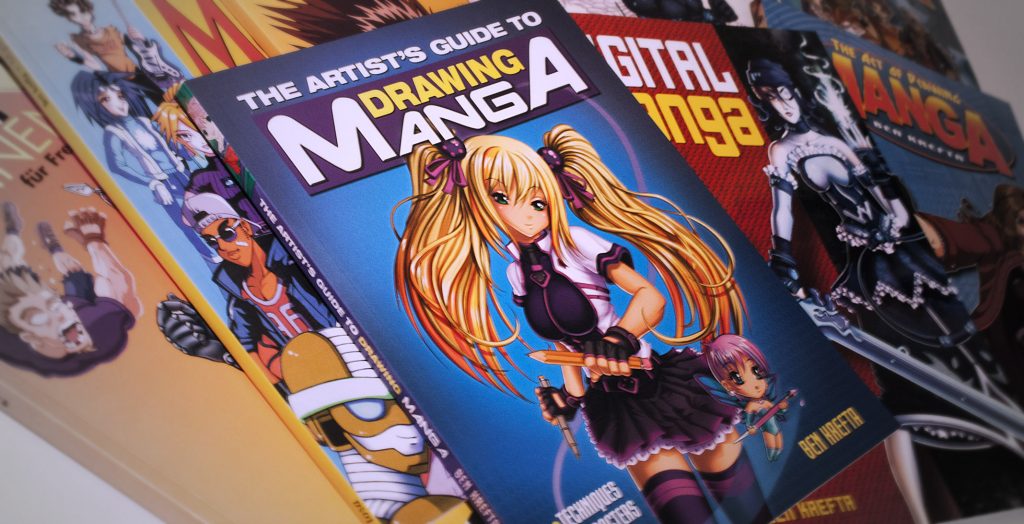
My latest tutorial book The Artist's Guide to Drawing Manga is now available for humans to buy.

It primarily covers basic to intermediate techniques for creating manga style characters and artworks. I'd been wanting to create a new replacement to my first book The Art of Drawing Manga, and managed to revamp every aspect of it. The written content was doubled, the artwork quality increased, the tutorials and examples more relevant and the book's layout upgraded. The Artist's Guide book was designed to compliment Digital Manga- a book which details the digital process in more detail.


Why do I need another how to draw book?

Every artist has a different take on how they create art work and every teacher has a different approach to breaking it down and explaining how it's done. I hope that aspiring manga fans can read through the book, gaining new insights, inspiration and understanding of how it's done. Or at least, how it can be done. If you've never picked up a how-to-draw book before, I'd recommend checking out the Artist's Guide. I want to help people become awesome artists and I'm happy for anyone to email me about the book's contents if they need extra help or explanation :)


Instead of learning manga, shouldn't I be learning fundamentals to improve?

The book's ultimate aim isn't to force students to replicate stylized versions of people. It's main aim it to ask students to consider things like: using guide lines, basic shapes to plan proportions, how to break down complicated images into easier to understand sections, to sketch before refining details, to think about how to visually communicate by adjusting a character's pose, expressions, actions, clothing and also hone in on what makes the anime style so special and unique.

Yes, spend time life drawing and studying the real world. Learn to draw all sorts of things- not just manga, but if you want a book to motivate you to try out some artistic ideas in a style you appreciate, or even if you just want to draw a few manga characters for fun, consider the Artist's guide to be your manga-flavoured medicine.


Why should I buy your book and not just use online tutorials?

I have a lot of faith in the book... I know what I'm talking about, having created manga inspired artwork for years for dozens of clients. Check out my portfolio- I'm teaching readers how to achieve a similar vibrant and professional look to their artwork. I'm no stranger to creating 'how to draw manga' books- I have refined my process of communicating my knowledge over the last decade and put together a package which will advance one's ability much quicker than if they were to try pulling tutorials from various sources online.

Art still takes a ton of time and practice to get better, but if my 1000s of hours of instructional book-writing experience can bring a reader's skills up a notch or two for a reasonable price, I'd like to think that's worth it.

Online tutorials can be a bit hit and miss. I spent days researching what's already online. And while there is some excellent stuff, it can be hard to find and there's also a lot of confusing, poorly written instruction out there. All these tutorials are scattered across the web in various locations while The Artist's guide to Drawing Manga houses 124 pages of info in one place. - That info has consistency. It's written by the same author, so you know you wont be getting confused by trying to follow different ways of doing things from different teachers.

Even if you read a lot of tutorials and have other art books, there's always room for another. I'd be very surprised if a reader didn't learn at least one new, useful technique from the book. If that one technique saves hours of time and trial and error, isn't that worth paying for?

And if you've read it already, let me know what you think in the comments below :)

Leave a Reply

Artist’s Guide to Exhibiting at Comic Conventions

by Ben August 26, 2016 in Art Talk 1 comments tags: #comicconvention, article, comiccon

Artists Table at Comic Con

In this article I'm going to be sharing my insights and give advice to artists looking to exhibit or sell their work at comic cons or similar events. I attended 10 different U.K. cons over a 10 month period from October 2015 - July 2016. All the info in this article still applies years later. My aim was to find out if comic conventions are worth investing in and if can I find success at these types of events based on the kind of artwork I produce.

Will you make millions from selling art and comic cons? Or will it turn out to be a fruitless venture, not worth the time of day? I can't speak for everyone, but I will be honest about my experience and what I think it takes to succeed.

First I'm going to just summarise a few answers to some key questions and will be talking about these things in a little more depth over the course of the article.

Overall is it worth an artist selling work at a comic con?

Possibly. It depends what you want to achieve from the comic con experience- whether that's to make contacts, try something new, or make a profit.

What should I sell at a comic con?

As an artist, you're there to sell your art. You can transfer that onto products and merchandise like t-shirts and stickers. But your main emphasis is artwork and the best way to sell that is as prints or take on commissions. Or of course, if you've produced a comic or manga, that's what you're there to sell.

How do I book a table for an event?

First find out about the events taking place across the country. Google for answers for info of upcoming UK cons, or search social media platforms for groups or pages related to conventions.

Each con should have it's own website- visit those for booking instructions or email the organisers for details on how to book.

To start off with- try going for the most local convention you can find to save travel expenses and test the waters as cheaply as possible.

Some cons offer an Artist's Alley, Comic Village or Small press tables at a reduced price- so they're usually worth looking at. For example, they might be £80 for an artist's table instead of £300 for a regular dealer table.

What should I bring with me?

You're given a table- how you display your products on that table is up to you. Be aware that you're often limited to a 6x2 foot surface area. Other than your products, the bare minimum you'll want is a table cloth or sheet to cover the table, and business cards / leaflets listing contact details or websites showcasing your stuff online. Buying food and drink at these events is always expensive, so maybe bring your own.

What's it like at a convention?

Day to day you'll be stood or sat behind a table, usually next to other artists or retailers who have their own table. Lots of people will pass by your table, check out what you're selling and perhaps a few of those will stop and want to buy something.

Be prepared for both busy periods as well as many quiet periods.

Cons typically last 1-3 days and are tiring! So try to rest as much as possible before, in-between and after the con is over.

Use the opportunity to check out other people's stuff and have a look around. I love looking at all the cool geek stuff going on at these events.

Overall, did you make a profit?

While I did make small profits at some of the conventions I attended in this initial period, overall the answer to that question is, No. [Edit: I have since gone on to make larger profits at cons after this article was first written] Which, to be honest, I was surprised at. Although I'm aware of the reasons for this, which I'll explain later on and there are things that can be done to greatly increase the chances of financial success, which I'll also talk about in detail later [Edit: which I later went on to do in subsequent years. And it worked!].

Lastly, even though you didn't make a profit, can I make a lot of money at conventions?

Yes you can, but it seems more likely that you won't. I'd estimate that 1 in 5 artists at cons make hundreds or thousands of pounds profit from a 2 or 3 day event. The majority of artists I've seen either make a small profit, break even, or make a small loss, and then there's a fairly large amount of artists who walk away from a con having lost a fairly large chunk of cash after all their efforts.

I don't want to be discouraging, but I do want to make sure people have realistic expectations of these kinds of events before making the decision to try one out themselves. And even though I'm in the same boat as the majority who struggle to make it financially worthwhile, it definitely wasn't all for nothing. I learned a ton from my experiences and I've got a lot to say which I hope people find useful.


Now, I want to go into a little more depth about my personal experience, thoughts and hopefully be able to offer up some advice along the way. I'll be discussing things like my reasons for attending, planning considerations, table set up, what you should and shouldn't sell. I'll provide a break down of costs and sales figures, show how much money I made, what I sold, what to expect and more.


Overview:


So, why did I try the convention scene?

Over the years I've been given encouragement to give the con thing a go from other artist friends and a part of me wanted to try it and thought it would be a lot of fun, but I was put off exhibiting for years. Basically:

  • I wasn't sure if my work was good enough
  • I was concerned about other artist's opinions of me and my work
  • I hadn't created a comic or graphic novel which I assumed was a pre-requisite
  • There was concern over the financial risk and what if it doesn't pay off?
  • And the fact I'd need to deal with social anxiety and being seen in public

So finally deciding to attend was a pretty big deal for me and turned out to be a great experience in many way. For example, I can't even imagine feeling socially anxious to attend further conventions now!

I think anyone trying out a new venture like this should consider their reasons for wanting to attend. Maybe write them down. For me, my priorities were:

  1. Be out there. Get known. Increase awareness. Potentially make contacts.
  2. Source of inspiration and ideas by immersing myself in my niche. Being around other creative's motivates me to draw
  3. Market research what sells. What can I learn for future ventures
  4. Break even
  5. Sample what it is like to attend an Artists Alley / to sell work. Also it's a day out of the office, an experience, and time away from way from the screen having fun.
  6. Make a small profit
  7. Attain secondary work or commissions

So it wasn't all about making mega bucks- especially at first. Although the financial aspects were always on my mind. At the end of the day, you're there selling work and you've got a quantity of items you'd like shift.


Planning:


I want to give some advice about Initial considerations- such as things to think about beforehand, table set up, products...

Firstly, Do Research and ask other artists who have been there already about their experiences. Before I booked a table, I visited a comic con in London and spent some time going table-to-table asking for advice- I got some really great insights by some amazing artists and I really appreciate that.

Initial booking- As I mentioned earlier- find out how individual cons work: get added to their mailing lists or check social media feeds to find out how or when to book. For UK cons, try Googling 'MCM', 'London Super Comic Con' [Edit - Now Deceased], 'Showmasters Film and Comic Con' for some of the bigger events. As I mentioned earlier, Small press and Artists tables can often be had at a reduced rate, although occasionally this can mean being situated in a less desirable part of the convention hall. Until you've sampled a con- you won't know for sure what the table layouts will be like.

And be quick when booking tables. You need to get in there as early as possible to reserve or secure table space. Recently I missed out on getting a 'Comic Village' table at MCM Comic Expo London- which is the biggest UK comic event. Apparently 200 tables got booked within 5 minutes of announcing the call for bookings. Crazy! I got my booking in within 40 minutes and to be honest, I don't think I could have made that any quicker, due to the fact I've got other things going on in my life and generally I don't want to be checking my email every 5 minutes every day to see if tables are now available.

Once you have confirmed table booking. You might need to supply a description of your work or image for the cons website or guide book. To be honest, unless you're a high-profile exhibitor, I imagine 99% of people won't care what your picture looks like or what your description says, even if they come across it, and it won't impact on sales.

Next Figure out how to get there:

Use Google maps to see how long it'll take and find directions. Consider Travel options- train, car, walking if possible. Give yourself enough time. Remember you'll be carrying a lot of stuff so how will you transport that?

Will you need Accommodation? For me, I can drive into a London event each day. It'll take 1-2 hours each way. If I'm headed further north, I'll book a hotel or guest house for 1-2 nights. The sooner you book accommodation, the more chance you'll have getting something nearer to the event and at a more reasonable price. Hotels near venues and on event days get booked out pretty quick.

Consider Parking. Parking at venues, for example, the Olympia in London can cost at least £30 a day, Friday, Saturday and Sunday. I use Justpark.com to rent a space within 20 minute walking distance for far less than that, and check if nearby roads offer free parking at certain times. Many of the roads near the Olympia are free to park on Sundays.

Is it worth bringing a friend to help? They can provide moral support, company, man the table while you get food, take a toilet break or allow you to take turns looking around the event and might help split costs? Sometimes you'll need to pay for an extra exhibitor pass to bring someone else along. At the MCM events they only give Comic Village exhibitors a single chair, so maybe bring along an extra camping chair or expect one of you to be standing.


Table Considerations and Display:


What makes a good table display?

The best thing to do is look at how other people are displaying their work, and figure out what looks effective and what might catch people's eye. Here's my first, albeit modest (and subsequently upgraded), table display:

Comic Con TableI wanted to do something a little bit different, and had a few people comment that they were impressed with my display. Here's a few things I got right:

  • Most tables are dark looking, with a dark table cloth. I wanted mine to be white, and clean like a gallery.
  • I added a branded canvas banner at the front and roll-up display stand at the back to help grab attention and look more professional.
  • Rather than lay everything down flat, I wanted things vertically positioned so that they could be seen from a distance.
  • Added price tags, even considering the font face for the labels to make things clean and uniform.
  • Added a little description of me and my work plus QR code to my website on one of the display boards.
  • The boards were custom made by painting a couple of old cork boards white and adding an arm to the back to allow them to stand- inexpensive and also making them easy to set up and take down.
  • The boards were angled at around 45 degrees to make them visible to anyone who passed by, no matter where they were standing.
  • Offered a variety of different sized and priced prints- small postcards for a couple of pounds and larger A3 poster sized prints for people with a little more money to spend.
  • Branded business card to match the display.
  • I added box holding a selection of prints for people to thumb through, with the hope to stop a potential customer from passively walking by and create an opportunity to start a conversation.
  • Overall fairly neat and tidy. Trying not to create too much of a barrier between myself and customers by boxing myself in with too many display panels above and around the table.

To start with, I wasn't sure if I would earn back my initial outlay on a table display, so I chose to play it safe and work with a tight budget, and see how things went.

What are other's tables like?

Often people use interlocking wire mesh cube panels as display boards for their work. I ended up trying this out for the last con I attended. It looks solid, professional, and again, I'd got several compliments on how it looks. Although I admit it takes a lot longer to set up- maybe 45 minutes to an hour?

Some artists just have a couple of products and don't opt for much in the way of displays. Whatever you decide, I'd advise a test run at home- dress your table up in advance and lay it out to see how it looks before bringing it to a con. Maybe when you get it how you want it, take a photo for reference on the day.

Is a decent display the most important thing?

No. Can it help? Yes. I've seen tables with just 2 or 3 different comics laid out flat which seem to generate far more interest than the more colourful, eye catching tables. At times it felt a bit confusing and frustrating to have considered my set-up and to feel like I got it right, while my neighbouring table was completely bland and empty, yet was generating far more interest. Perhaps my display wasn't as effective as I thought? Or more likely people simply weren't resonating with my work. It at least highlighted to me just how important is it to be selling the right product compared to how you display it.

Why did I price and label things?

Personally I don't like to ask a seller for prices because:
1- If a seller is busy with another customer I don't want to stand around waiting to find out a price.
2. It creates too much awkwardness if a price is out of my budget.
Be prepared to lower or raise prices. Perhaps prepare additional labels to swap out if needs be half way through a show.

I expected that mentioning prints are a 'high quality Giclee' or on 'thick 300 gram per square meter card stock with fade resistant inks' was an added selling point. In a gallery setting or online, this may be true. Although, to be honest, it don't think anyone really cared about the finer point of paper or ink quality at the conventions. So long as customers liked the artwork, they'd buy it.


Your products:


What did I bring to sell?

Mainly prints of my original manga style art. Over the years I'd mostly I created bright, colourful and digitally glossy character art. See below for some examples.

[gallery type="square" link="file" columns="5" size="medium" ids="2826,2821,2822,2825,2818,2816,2815,2810,2812,2801" orderby="rand"]

I offered a range of prints- at different prices:
4 Different A6 Postcard designs at £1.50 each or 4 for £5
10 Different A 5 Postcard designs at £3 each or 4 for £10
17 Different A4 Prints at £5 each or 3 for £10
5 Different A3 Prints at £10 each or 3 for £20

Plus I was selling one of my recent published books- 'Digital Manga', a tutorial book teaching Photoshop and digital art techniques at £10 a copy.

It's worth noting that at the MCM cons, you're specifically instructed not to sell fan art if you've booked a reduced rate Comic Village table. Original Art and comics only! I will still see some people selling the odd fan art or draw fan art commissions on the day. I don't have a massive problem with that, although most artists I've spoke seem to frown upon it, as it gives certain people an unfair selling advantage.

I've since learned that my style and theme of original artwork wasn't necessarily the best thing to bring to a comic convention. And I'll explain about what I did right and what I did wrong later.

So, what Should you sell?

Probably prints and/or a comic or art book. Look at your portfolio and short list your favourite images. Maybe get a second opinion. For your first show, bring along a range of images- it all needs to be geek based; sci-fi or fantasy themed and if you draw both portraits and landscapes, bring both and see what sells.

As a general rule, aim to demonstrate a consistent style and theme. This is one thing I feel like I seriously lacked and regret in my own work. I love playing around with different styles and ideas, which is all good and well, but when you want to sell a product or brand, in this case, you and your selection of artwork, a consistent style and theme is really important. It's something I will definitely be working on for future events.

Fan art is important. Although I'd not tested my theory over the course of these 10 initial conventions I'd attended, but I'd suspect a good piece of fan art can outsell originals 10-1! Most people at these events are fans, looking to engage with their passion and interests. If you show them their favourite character or a series they love and have an affinity with, they'll be extremely tempted to part with their cash. There's fan art all over the place, so consider being original- by executing your individual style or adding some unique element to the fan art.

I've traditionally concentrated on producing originals. That's what I value, what I'm mostly interested in, and what I'd personally buy from other artists. A part of my finds it somewhat immoral to effectively piggy-back off of another artist's creation or success solely to cash-in and make money. Doing so makes me feel like a sell-out, willing to throw out my artistic integrity. Having said that, I don't have a problem with being a genuine fan of something and wanting to create fan art as a celebration of another's idea.

However, I've now discovered that kind of thinking won't shift high volume and you need to sell a lot in order to make these things financially worth your while. I've talked with several artists who tell me their best sellers are always the fan art pieces and rarely their originals. And I noticed first-hand how, for example, one top-end fan artist sold 8 prints in 5 minutes, making £90 while I happened to be passing by their table. Whereas I've sometimes not even made £90 during the entire day! Of course I'm comparing myself with a fan artist who had triple the table and display space I had, was in a far better location within the venue and producing consistent, high-quality work.

There is a market for original products if the quality and consistency is there. If you have a following already, you don't necessarily need to go down the fan art route. But I feel an unknown artist would be better off introducing people to his or her original work through fan art if possible.

- This is something I would like to experiment with. I am curious to see what is possible if I produce a series of high quality, consistent fan arts to sell at a comic con. I feel it's something I'm capable of although it does mean taking time away from the original art I enjoy creating, being left with work I couldn't necessarily sell or use in certain other markets and I'd need to reconcile my artistic principles i.e. To sell out, I must become a sell-out, and that is simply part and parcel of the life many artists face in order to financially survive.

Regarding fan art licensing and copyright restriction: It is usually illegal (technically illegal) to produce and sell fan art. An original owner or creator of the work in which you're creating a derivation of would have grounds to sue you in this case. In 2014 the UK introduced a new 'parody, caricature and pastiche' law which could apply in the case of fan art, although exactly what constitutes a copyright infringement is still partially unclear. What is also unclear is at what point is a work considered original, derivative or pastiche?

In reality, suing a fan artist is extremely rare.
  1. Those that hold intellectual property copyright (for example, Marvel, Disney, or Nintendo) wouldn't sue fan artists since they're promoting the fandom around their creations which potentially benefits companies in the long run. For a company to sue a fan making a relatively nominal sum of money from their creations would also generate unwanted bad-press for these companies.
  2. Millions of copyright infringed works are being uploaded onto the web and sold or used as a marketing vehicle, or sold in stores every year and this is virtually impossible to police.
  3. Everyone is doing it. To the point where it's evidently becoming more and more difficult for a comic or anime style artist to build a following or financially survive without producing or selling fan art. This fact coupled with the confusion and ambiguity of the laws in different countries makes pursuing individual artists a confusing hassle.
  4. If a company did want to make an example of those who infringe their IP copyright, they'd likely start with other, larger organisations, groups or companies who are damaging them or negatively effecting their sales and reputation in a much greater way. The prolific Chinese counterfeiters who make millions out these infringements on a daily basis would be a better place to start, rather than singling out an individual artist.
  5. Original creators would find it very difficult, time consuming and costly to peruse individual fan artists.

On the subject of fan art, sure- draw popular characters. But don't just re-work someone else's existing artwork. On a few occasions, I'd chatted with some really friendly, nice "artists" at cons who I'd initially wanted to support until I checked out what they're selling; an existing image grabbed off Google which they'd re-painted, or digitally manipulated. I don't feel a cheap re-hash or rip-off of another artist or designer's work has any place at an event like that. Don't be lazy or sneaky! If you're going to make fan art, make something entirely your own.

Home Printing or using a print company?

I've got a fairly decent A3 inkjet printer, so decided to manage my own print runs. This meant I could try just 5 or 6 copies of any one design, bring them to an event and see if they sold. If I needed more for the next day (at a local event), I could print more.

Using a print company will mean a better quality of print and could be significantly cheaper per print proving you buy in bulk. You'll likely have to get a minimum print run of 50 per design.

Since my work was never selling like hot cakes, having a dozen or so designs and 4 or 5 prints of each was sufficient and glad I didn't commit to even 50 of each or I'd likely still be left with 85% of my stock after 10 conventions!

I was selling a low, medium and high price selection of prints to cater for different budgets. Although I feel if you have a more mature style of art that will attract an older and wealthier customer, maybe just concentrate on larger, higher priced prints?

Like everything, these are just my experiences and observations, so nothing is set in stone and you may need to adjust based on your style of work and specific requirements.

I'll be discussing print costs and pricing later on.

People often seem to do ok by selling their comics

I've not sold my own, so can't really comment about this in detail. I personally love comics and would love to actualise my own story ideas, but sequential work takes me forever, so have been reluctant to invest my time in creating stories. I have a lot of respect for anyone taking on the task to complete a comic, graphic novel or two. Providing you can get people into your story and immerse themselves in the world you've created, you'll gain a loyal fan for sure.

Taking on commissions each day is a good idea

This can be a caricature, manga or comic style portrait or a requested character art. Usual scenario is- a customer will come up to your table, ask what they want and if you're happy to give it a ago, you'll take a deposit or payment up front, then get to work. If you're going to need a few hours drawing each piece, or have several to get though, obviously tell the customer to come back later.

Again, this isn't something I've tried. Reason being, I feel that my art is inconsistent and I couldn't guarantee what I'd end up producing. I feel vulnerable to having an off-day where I might not produce the kinda work I'd be pitching. That wouldn't be fair on the customer if I couldn't deliver something that wasn't 100%. Plus I feel uncomfortable being watched as I draw.

Several people have asked me about commissions. I say, I'm willing to take them on after the event so that I can devote more time to producing something of higher quality, and offer to post the work directly to the customer, although to be honest, I've never received a genuine commission request following an event. I think most people just want to pick up a customised memento on the day. A lower priced sketch, and not necessarily a work of art.

Also something to initially Avoid are things like selling Clothing. Printed t-shirts for example require larger print runs to reduce cost and make a profit, they needs more display space than a single table allows, and the requirement for multiple sizes gets complicated. Items like custom coffee mugs might seem like a good idea, but they have a low profit margin, take up space to store and require a larger production run to get the stock cheap enough to begin with.

Stickers and badges? I personally wouldn't bother with them. Or at least not make them your main focus. Sure, they can definitely sell, but you'd need to shift hundreds, if not thousands in order to make any good money from them. I can just imagine most convention artists have 100s or 1000s of these things just lying around in boxes at home which'll end up getting thrown out in years to come.


Other things to bring with you:


Other than your artwork, I'm going to list a few things you'll need to bring with you:

Tickets or printed passes for the event, which should have been emailed to you.

Directions or a map to get there or other Paperwork. Keep all that stuff on your phone also as a back-up.

Business cards / optional flyers if you have something specific to promote.

Display banners.

Overnight bag if staying over.

Food and drink.

A float and cash box with enough spare change.

Credit card facilities aren't necessary, especially for your first event. Con-goers know cash is expected. Having said that, I wouldn't rule it out and have missed out on a sale because I didn't accept card.

Bags for prints. Every time a customer buys my work, I always put it in an appropriately sized a clear, plastic sleeve to help give it some protection. Some people prefer to roll up their work with a rubber band, some use bags with handles.

A Sharpie or pen to sign your products.

Art supplies if you intend on drawing or taking on commissions during the event.

Other set up sundries like pins, tape, paper, blu-tack and scissors.

A lot of people, myself included use a suitcase to put everything in.


Day to Day Experience:

[gallery columns="5" size="medium" link="file" type="square" ids="2747,2794,2869,2872,2876,2879,2900,2907,2920,2981"]

On the day, when you arrive at the venue your first goal is to get a wrist band or lanyard exhibitor pass, so that you can then get in and begin setting up.

I find this in itself to often be one of the most daunting aspects of the convention scene. You often have large exhibition halls to navigate, little to no sign posting as to where you sign in or set up. Security guards or event staff often have no idea where you should be going either. I always expect a confusing mess and lack of direction, and that's often what I get. Especially with the MCM and Show Masters events- the latter being particularly awful at providing on-the-day guidance and instruction.

Once you do get your pitch set up, it gives you a great opportunity to browse the venue before the public arrive and introduce yourself to neighbouring artists or retailers. Most exhibitors I've met at these events have been really nice people, and it definitely helps make the days go quicker when you can have a chat with like minded people about shared interests.

The first few times I attended these events it almost felt magical! I was in geek heaven! Although once you've seen a few cons, you've seen them all so feel that novelty starts to wear off after you've been to a few- most vendors make repeat appearances on the comic con circuit, selling the same selection of items every time.

2 day events cover the weekend, although 3 day events are becoming more common, which include a Friday.

Friday is always the slowest, less busy day, while most visitors will attend on the Saturday. For me personally, I often debate whether it's worth even attending the Friday since just trying to break even can be a struggle. Sometimes, Sundays can surprise me, with weekend pass holders deliberately not making purchases until the last day.

A day will involve quiet periods, even for the more popular sellers. Use these times to tidy up your stock, chat with neighbouring artists, check out other people's stuff or draw, particularly if you've got a list of commissions waiting to be done.

I'm often too tired to draw and focus at 100%. Dealing with fatigue is a definite factor for me at these events since they often require I get out of bed at 5 or 6am in order to drive to the venue and set up before the doors open at, say, 9. I'm a night owl so I've normally only had a few hours sleep before hand. Also at the end of a day I'm often 'buzzing' and over stimulated from the day's activity. This makes it hard to sleep the next night, even though you know you've got to be up early the next day to do it all over again. And if you're staying at a local hostel or hotel, the fact you're not in your own bed doesn't help you with sleep.

Don't forget to eat and drink during the day to keep your energy levels up!

Busy times are great. And I think if you look busy, other people suddenly become interested in your table and start to see value in your work. It's a weird one.

Like I say, most other artists are friendly and worth chatting to, even if it's just to pay a few compliments, comment on their work and to pick their brains about things you're not sure of. Some artists talk about annoying neighbouring competitors. I didn't necessarily experience this but others tell me how annoying they find thing like:

* Calling out to beckon people over to their table
* Having their friends or fellow staff standing in front of tables effectively creating a wall between a neighbouring artist and potential customers
* Selling things they shouldn't. For example, selling little more than a novel or novels in the 'artists' alley.

At the end of the day. You can leave your stuff at the venue. Most people cover their table with a cloth and or put stock and valuables underneath their table.


Selling:


Before I get to costs and sales figures I'd like to discuss selling.

So how much should you sell your work for?

This is probably the one question artists ask the most. The usual advice given is, "sell your work for what you think it's worth to you", but that doesn't really help. At these events, there's a typical price and a going rate for things like artist's prints:

An A4 8x12 inch print sells for £3-£15
I sell mine for £5 each or 3 for £10.

An A3 12x16 inch print sells for £5-25
I sell mine for £10 each or 3 for £10.

- These are usually for unlimited print-runs. Limited editions are often £5-£10 more per print.

Sure, if you were selling art in a art gallery a limited A3 print could likely sell for £40-£100 or more. Most con-goers aren't art buyers, are too young to have that kind of disposable cash or, unfortunately, most people just wouldn't value comic style art in the same way.

A4 sized originals usually in the form of character drawing or marker coloured art tend to sell for between £20 and £60.

However I have seen industry professionals or those with a fan base attempt to sell A4 originals for between £150 and £400. The industry professionals (having worked on a mainstream comic for example) typically charge £200-£300 for an A3+ sized pencilled comic art cover.

Commission prices are similar to original art, although £10 for a reasonably quick sketch is common. More often than not, a quick sketch is preferable and within most people's budgets.


If you have a fan following, taking commissions before the con is a good idea, giving your fans the opportunity to buy the work directly from you while giving you time to prepare the work beforehand.

To up-sell is an good option; so 'buy one get one half price' or 'buy 2 get one free'. Your selection or work will need to be consistent or similar to maximise the opportunity to sell more than a single print.

Use round numbers to avoid running out of change and keep things simple. So charge £5 rather than £4.95.

I'm not a salesman and I'm sure there are a million great books out there to assist with selling to the public and buyer psychology but I've listed a few basic pointers to help project yourself more favourably:

  • Smile, be friendly, welcoming and positive.
  • No need to go over the top. Just saying hi, or invite people to browse can be enough to secure a sale.
  • If people do come over while you're drawing, look up, make eye contact and say "hello", or "feel free to have a browse", or "if you need anything let me know", otherwise people might feel uncomfortable at the thought of disturbing you.
  • Engage with visitors- think of some opener questions like, "Hi ya, so what are you into?", "How's it going?" or simply- "Nice cosplay!"
  • I like to ask: "Do you have a favourite piece?" or "Anything that caught your eye?", I feel this gives customers the opportunity to actively find a piece they can identify with and consider in a positive way.
  • Pressuring some people into a sale may work for smaller items although, it may be repelling other visitors. I personally don't like the idea of it, even though I've seen it can get results, to a point.
  • At first I thought it would be a bad idea to have my head down, working on art, but actually, I think it takes the pressure off people to come over and have a look at what you're doing or what you're selling without you, the seller, looking at them and making them feel uncomfortable.


If you can market yourself before the con, do. Post on social media accounts- Tumblr, FaceBook, Twitter, Deviant art, Instagram, your own site or blog. Obviously if you don't have a following, this will have limited success, but even if a few friends and family know you're there, they may attend and stop by on the day to say hello.

Also, while you're there, record sales. Work out which items are selling, and how much money you make, otherwise you'll have no idea if the event was financially worthwhile.

What people seem to buy?

It's difficult to pin point what people buy from other artists. However, from what I observed over the course of events, the artists that did well covered these bases:

  • Already having large fan following
  • Art which creates an emotional reaction in people: Funny, thought provoking, clever or nostalgic
  • Creating Fan art
  • Selling Stories- manga or comics
  • Producing Top-end, high quality work
  • Unique style or something eye catching
  • A combination of the above

So earlier, when I explained what I think you should sell, it was based on these kind of observations.


Costs Breakdown:


So how much did I spend and how much did I make at the conventions I went to? First I needed to invest some money for my table display and for stock. I'm good at keeping costs to a minimum and tried doing this almost as cheaply as possible to lower risk and maximise profits.

Set up expenses:

Table Banner:                         £12.99

Roller Banner:                        £21.69 (was £30.99 -£9.30 part refund)

Postcard Stands:                     £6.99

500 Business cards (400gsm double sided): £17

Table Cloth White:                 £0 (already had one)

Display Boards White x2:     £0

A6 Bags x95:                            £0 (already had some)

A5 Bags x190:                          £0 (already had some)

A4 Bags x100:                        £4.99

A3 Bags x100:                          £11.99

8" Cash Tin/ Safe Box:           £4.49

Interlock square Display:       £12.75

Table Cloth Black:                    £5.00

Misc:                                            Not recorded: Less than £1

Stock:            

Prints (Paper and Ink):            £0-£0.60p each. These costs were deducted per item sale

Digital Manga Book:                £1.75-£3.17 each. These costs were deducted per item sale

TOTAL:          £97.89

So that was pretty much my initial outlay, plus Stock costs. I managed to make sure I never had much surplus stock, so luckily I don't have 1000 unsold prints or books sitting in boxes at home.


Sales figures:


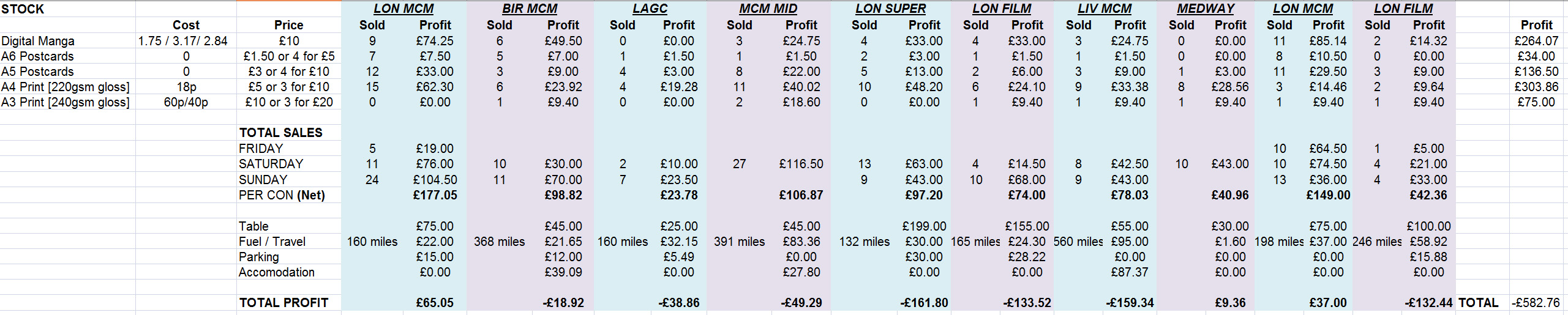
Here are my sales figures and profit made after deducting Table Cost, Fuel, Parking and Accommodation:

consales1

[Taken from an Excel Spreadsheet. Click for larger image.]

Results:
  • London MCM (October 2015) - Small Profit
  • Birmingham MCM (November 2015) - Small loss
  • London Anime and Game Con (February 2016) - Small loss
  • Midlands MCM (February 2016)- Small loss
  • London Super Comic Con (February 2016) - Big loss
  • London Film and Comic Con (February 2016) - Big loss
  • Liverpool MCM (March 2016)-  Big Loss
  • Medway Film and Comic Con (March 2016) - Small Profit
  • London MCM (May 2016) - Small Profit
  • London Film and Comic Con (July 2016) - Big Loss

I can sum up the financial side of things like this- my venture failed. Including the initial £100 outlay, I'm around £680 down. I could afford to lose that amount, but if you're thinking of doing something similar, would you be okay with that? As business ventures go, that's not too bad. To be fair, many businesses can be tens if not hundreds of thousands of pounds in the red for the first few years of trading. Perhaps Cons are a good way for some people to learn a few ropes in the business and retail world before taking on bigger, higher risk ventures?

I know how to find a bargain. As well as inexpensive stock in the form of prints and books, I managed to keep my accommodation costs very low- averaging just over £30 per night at some reasonable hotels. The only cheaper alternative would have been shared dorm hostels or sleeping on a friend's couch. Travel costs were sometimes split between myself and a friend.

It would be tempting to hide the fact my convention circuit experience wasn't 100% successful. It would probably make me look better and give my words in this article more authority. And I want to be positive and encouraging to artists looking to try the convention scene, although it's more important for me to be balanced, realistic and give an honest account of my experiences, as depressing as that might sometimes be!

[UPDATE: It's worth mentioning, since writing this article a few years ago I've continued to attend conventions to the point where I not only re-paid my initial £582+ loss mentioned above, but am now making profit. Hooray- That's good news :)]


Final thoughts:


What did I get right and wrong?:

Hindsight is a great thing. I've learned a lot from my experiences and that's why I'm talking about this stuff- so that no one needs to step into the realm of selling at conventions without being educated about what's involved.

My biggest problem was simply not turning a profit. I tried exhibiting my work at 10 different shows across the UK. Some smaller and more local, others in larger cities. I can see how you might perform well in one show, and not so well at another. There are different types of audiences and factors which might help you make money at one event, while failing at another. And while every show differs, it gave me enough data to draw a few conclusions.

Earlier I listed what I observed others selling and why.
- I didn't have a comic to sell, a significant fan following, fan art or anything clever or thought provoking on show, no unified concept or consistent style, I wasn't taking commissions. Instead, just offering some of my pre-existing, reasonably decent, original character art which I thought would be sufficient to at least get me started. I'd hear people comment as they walked by the table, giving praise and suggesting they liked it, or coming up to me to tell me how much they loved what I was doing, but obviously not enough to part with their cash.

Frustratingly there wasn't time for me to produce a new series of artwork in-between convention bookings. After being 3 or 4 events in, I knew I needed to adjust course, but shows were already booked and I had too much going on at the time to create anything new.

I still have limits so far as artistic technical ability is concerned. I can continue to practice my art and increase my ability, but leveling-up is something that takes years of conscious effort.

In the mean time I can reconsider the content of my work and produce what people want. In an ideal world I'd be one of these artists who by luck happen to love creating the kinds of art which people want to buy. These types of people can effectively walk into a convention and nail it right off the bat without needing to cater for a market.

Whereas, if you're like me and you're work is too niche or if people just can't see the value in your work like you can, then you haven't got a choice but to follow the money and make more effort to get hold of it.

I'd be really interested to try some more events and prove my theories correct, but first I'd need to get to work on conceptualising and creating a new range of artworks designed specifically for the con-going market.

Money isn't everything, and I knew that going into this endeavour. But if people are willing to buy your art, it does give you a boost. It feels like you're doing something worthwhile, that your work is effective, it's making people happy, it's resonating with others who demonstrate they want to connect with you and your ideas by making a purchase. And when I sell a Digital Manga book, I'm happy knowing it's going to help someone to improve their Photoshop skills and I'm passing on my knowledge. More sales means the more I know I'm connecting with people.

Therefore if sales are far and few between, not only do the days drag, but it feels like you're sharing your creative vision, exhibiting the fruits of your labour and putting a piece of yourself out there, and no one cares. That can be tough to deal with, and perhaps somewhat isolating if you see others around you who do seem to be connecting with customers.


What did I get right?

I managed to keep costs really low without sacrificing quality:

I spent under £100 for my table display, bags, stuff like business cards. One guy next to me mentioned spending over £100 just on his roller banner, which wasn't even as wide as mine. I could have easily spent £500+ on this initial outlay.
Stock and item costs were like £150 over 10 conventions. I could have easily spent way over £500 on this, maybe £1000-£3000+ if I was overly optimistic and had ordered print runs of, say, 1000 for each design I had available.

I recorded everything:

I calculated travel costs to the penny, where I bought stock and how much I paid, how many items I sold, which items sold and on what days. It's easy to find out how much cash is in the pot by the end of the event, but I imagine I'm one of only a few people who can tell you exactly how much profit I made- to the penny.

My table looked pretty good:

Given that I was sticking to a tight budget and working with the products I had to sell, I didn't feel there was much else I could do to improve my set up, other than what I tried on my 10th convention, which was to increase my display area using the black interlocking squares. What I had wasn't perfect, but it was easy to fit in a suitcase, roll out and set up. I'd definitely like to improve my display area and would be willing to spend more if it helped showcase the work and increase sales, but that easily takes second place to getting the product right.

I used what I had:

I got to test the waters using artwork I'd previously created without needing to invest time to produce a product for the events beforehand.

I booked several events in one hit:

This at least gave me a overall feel for the convention scene. Who knows, I may have otherwise done poorly in one event, then gave up without trying another which would have turned out to be a success. And most events were local to me and within an hour or two's driving distance.

I learned a lot:

If anything I learned what didn't work- both by observing my own mistakes as well as other peoples. I learned that there seems to be a formula or framework to success. We can all be decent artists producing decent work, but the message you communicate and how effectively you get it across to your target audience and while within the kinda big, busy convention environment is vital. And generally I think you can apply the things you learn at events to other aspects of your life or artistic endeavours.

Also, some bad luck was involved:

One convention I attended was just bad! No one was selling particularly well. The guy next to me took a £300+ loss and the best feedback I'd get from asking around was "at least I made back the cost of the table"!

Another two conventions saw me and a few other artists shoved out the way of the main venue hall. The footfall was around 10 times less than if situated within the main part of the show.

Overall, due to such poor sales, I didn't get sufficient data to conclude what my best seller was. I sold a little bit of everything, be it a cute anime girl, a macho cyborg warrior or a tattoo inspired skull illustration.

So why are there so many artists desperate to sell at conventions if most artists will in fact struggle to make money?

I've spoken with dozens of artists at these events (mainly original art / comic sellers) and it seemed like a lot of people didn't want to admit how much they were financially struggling. I would have loved an honest discussion about the financial factor, but nearly everyone was trying to project a positive, successful vibe. I don't know exactly how much other people were making, but I found it hard to believe that artists felt it was acceptable to break even or earn, say just £100-£200 net profit after devoting 2 or 3 days of their time. Plus however many hours of art-working and preparation time before each event.

Some guys told me they make their living from these conventions. I find that hard to believe also. How is that possible unless you're consistently bringing in one or two thousand pounds worth of sales from each event to offset travel costs, lodgings and expenses? For the majority of artists I didn't see that kind of money exchanging hands while I attempted to keep tabs of transactions taking place within the same isle as me.

I'm sure some artists simply enjoy taking part. I know my initial motivations weren't based around earnings, although money did become a bigger factor, the more I attended.

I read an American Comic Con report from Kiriska.com which listed average sales at over $1,200, (about £950 at the current exchange rate) with highest earnings at $11,000. I've even heard rumours elsewhere of artists making $20-30,000 at a show!

I don't have a UK report to compare against, but if I were to guess, UK gross revenues wouldn't even be half that. I remember two people I chatted to both reported their most profitable events had earned them £800 gross (not net profit). Although making half that amount seems more common. After deducting expenses, it really isn't much money at all.

I guess, if you self-publish a comic, or draw this kinda comic or manga art there aren't many offline outlets to exhibit at. It seems to make sense for artists flock to conventions in an attempt to get their work out there if there aren't alternatives. Although in practice I wonder just how many artists pour more money in to a convention than they make back?

From a social stand-point, it's cool after you start seeing the same people at events. There's somewhat of a community in an artist's alley and it gives an opportunity to chat with like-minded people and make friends with some awesome artists. Admittedly I felt like some of the regulars were a bit cliquey with each other and I guess that's to be expected. I think artists in general are creative people who want to focus on their own projects, so are often too engaged with their ideas to consider enquiring about yours. So an opportunity to not only work towards the project of exhibiting at an event, but socialising and being out there is a big driving factor for many.

There's potential to sell well at a con, but can take a serious time, effort and trial and error, to get to that point. An alternative for artists might be an online Kick-starter campaign or Pateron account to fund their creative ventures. I've not tried these, but those who have tell me they often involve a huge amount of hard work to get a project funded or to be able to live off of monthly Patreon earnings. Most of us love the thought of sharing our ideas and vision with the world and getting paid to do so but it's evident that only a very small percentage of artists get given that opportunity.

I wish I wasn't saying this! It's kinda sad and I wish there was enough money to go around so that creatives could do their thing without money worries. Many artists I know produce something worth sharing and paying for and the challenge artists face is being able to find their market and the types of people who appreciate their work and who want to support them. Meanwhile co-existing with a million other competing creatives.

So, conventions- Give me credit for giving it a good go and trying to make something happen. It does take time, effort and energy to put yourself out there and I have respect for anyone who goes through that process. And I want to say a huge thank you to everyone who stopped by at my table to check out my work and I really appreciate every individual who made a purchase. It really means a lot to me.

For anyone else, I'd say to also give it a go! You never know what will happen until you try these things, but it's worth being realistic and open to the fact you could lose money and waste time at an event unless you do it for the right reasons, you get it right, and are offering what people want.

I'd love to hear about other people's experiences attending comic cons or similar events. I've tried to think of everything I can so far as conventions go, but I'm sure I've missed something so if you have any other questions, feel free to leave a comment and I'll do my best to answer them. I know this was a long one, so thanks for reading!

Leave a Reply

Sign up to Newsletter
For art-related news, updates, a 15% discount on all art print orders PLUS be entered into a free bi-monthly prize-draw to win a mini art print!

This field is required.

Many thanks for subscribing!


FEATURED PRODUCTS
  • Medusa Sticker
    Medusa - 4 inch Vinyl Sticker
    £4.00
  • Anime Bowsette
    Bowsette Art Print - A3
    £17.99 – £27.99Price range: £17.99 through £27.99
  • Sale Product on sale
    Dio and the World - Men's
    T-SHIRT Dio and the World - Short Sleeve Tee
    £24.99 Original price was: £24.99.£19.99Current price is: £19.99.
  • Sale Product on sale
    Mens Junko Danganronpa Tshirt
    T-SHIRT Danganronpa - Short Sleeve Tee
    £24.99 Original price was: £24.99.£19.99Current price is: £19.99.
  • Japanese Geisha Wall Art Canvas
    Japanese Geisha Wall Art Canvas
    £24.99 – £599.99Price range: £24.99 through £599.99
  • World War Skull Art
    World War Skull Wall Art Canvas
    £24.99 – £599.99Price range: £24.99 through £599.99


BLOG ARCHIVES

RSS Feed RSS – Posts

RSS Feed RSS – Comments


Return to blog start...