Melancholic Me

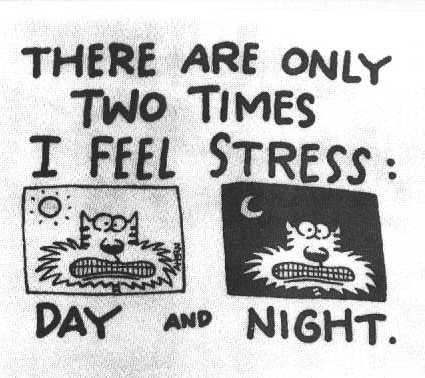
When something is so true it makes you laugh! – This is me. It’s one of four Temperaments.

“The Four Temperaments personality system attempts to describe a person’s overall attitude towards problems, other people, and life in general in a very broad way. They aren’t meant to describe every detail of a person, such as their favourite flavour of ice cream or their mother’s maiden name; rather, they just describe a person’s overall attitude.”

And so, I discovered I have the ‘Melancholic’ temperament…


In a nutshell…

Melancholic people are emotionally sensitive, perfectionistic introverts.

Perfectionistic

The defining feature of a melancholic attitude is perfectionism. They are idealists who wish for things to be a certain way, and they get distressed when they are not.

They hold themselves and others to unrealistically high standards, and get distressed when these standards are not met. 
This leads to them being self-deprecating – because they do not meet their own standards – and critical of others – because those others do not meet their standards.

Their generally dour demeanour comes from their inner struggle between an imperfect world and a desire for perfection.

Many melancholics wish to learn and to understand, to know the details of every little thing, because to be ignorant is to stray from perfection. They are not content to just accept things the way that they are. 
They are inquisitive and ask specific questions in order to come to a clearer understanding.

This leads many of them to be overanalytical, neurotic worriers.

They are very stubborn, because they try very hard to stick to their own carefully considered views and standards of perfection, and are not easily shifted from this path. They do not go with the flow.

They are tenacious and cannot let things go, because ‘good enough’ is not good enough. They strive for perfection.

They are very pessimistic, and assume the worst due to these unrealistic standards.

They think and plan before they act; they are not the types who will resort to rash, impulsive behaviour, and will panic if they are unable to plan in advance.

It’s easier for them to reject and hate things than it is for them to love and embrace them. Their interests and tastes are picked carefully, and they give a lot of attention to each one, and hold them close to their hearts, rather than having many fleeting interests that change quickly and often.

They complain a lot, in a ‘whinging’ kind of way rather than a ‘put down’ or ‘demanding’ kind of way.

They tend to argue, because they cannot simply let things be if they seem wrong. They argue using reason, evidence, logic, and explanations, delivered analytically or with pleading. They only argue to set wrongs right, rather than to assert dominance. The argument is about the issue, not about them.

They respond poorly to compliments, often ‘rebutting’ them by saying that they’re not so great after all. 
“Wow, that’s a really nice painting you just made!” 
“I don’t know, the eyes are probably too big…” (rather than “Thanks!”)

They will blame themselves for mistakes, because they are acutely aware of their own imperfection.

They tend to prefer things to be tidy, organised in some way or another. This doesn’t necessarily mean ‘neat’ as such; often they have very idiosyncratic organisation methods.

They are idealists, who imagine perfect fantasies and feel upset when things don’t live up to these fantasies.

They prefer to tackle the heart of the matter, which can lead to them avoiding ‘beating around the bush’.

Introverted

Melancholics are the most introverted of the temperaments in that they crave time alone, and are most at ease in their own company.

They can enjoy spending time with others, but this drains their energy, and they need alone time in order to recharge.

Much of their introversion comes from their perfectionism. They are picky about the sorts of people that they associate with; people who meet their standards and share their outlook. People that don’t will make them uncomfortable; they do not wish to talk to ‘anyone and everyone’. 
Their self-deprecation also makes them think that they might not be very interesting anyway, that they aren’t really worth spending time with, even if they know in the depths of their minds that they are very interesting indeed.

Once they have someone to talk to in a quiet and relaxed environment, they can talk a lot and will enjoy sharing thoughts and ideas.

They are very wary of making friends. Unlike sanguines, it can take them a very long time for them to consider someone they’re familiar with a ‘friend’, but once they’ve reached this point, they will likely stick with that person loyally.

They prefer having a few close friends to many acquaintances.

They can be seen as selfish, because they prefer to be alone with their thoughts, to have their own things, rather than sharing time or possessions socially with others. 
They are usually very possessive about the things that they own and are reluctant to let others borrow or use them, because they treat their own things well, care about everything deeply, and will worry that others will not look after them with the same level of care.

They could be described as ‘intense’, rather than ‘easy-going’.

Sensitive

Melancholics are very emotional. They are moved deeply by beauty, and by distress. They are very easily hurt, because of their perfectionistic tendencies. 
Often their moods are like delicate glass sculptures; built up slowly, deliberately, and carefully, but easily broken, and hard to repair once shattered.

They respond to things that they dislike with misery and with tears rather than with rage.

They are very slow to ‘snap’, but will hold onto emotions for a very long time. They hold grudges, because people who have failed to meet their standards, who have hurt them, will not just suddenly meet those standards without changing drastically.

They can become very ‘moody’, and they can be difficult to interact with because they are so easily hurt.

They are not aggressive, and wish to flee from things that cause them distress.

If they want to get back at another person, they are more likely to make them feel guilty than to insult them bluntly.

They are ‘thin-skinned’.

Role

In our distant ancestors, the melancholic members of a pack may have been the analysts, the information gatherers. They scouted for potential danger, or for food, and reported back to the pack leader. The more accurate their findings were, the better; this led to a trend towards perfectionism, as the ‘analysts’ closer to perfection survived better than those that made sloppy mistakes.

In current society, they often tend towards analytical roles such as scientists, analysts, programmers, logicians, and so on. In fantasy settings, they may be wizards or sages.
Working with what you’ve got

I’ve spent years now sucking up knowledge, first from books, then from the internet. I still can’t get enough of intelligent scientists, thinkers, authors and communicators who consistently enlighten me to things I’d otherwise never find out.

While there may not be answers to all life’s questions available to us, there’s now enough content in the world to get a really good grasp about current, optimal ideas: Best ways to improve confidence, health, a skill, or answer the questions of why an aspect of life or the universe is the way it is.

For those interested in improving their lot, which is most of us, the knowledge is now out there and easily accessible providing you spend a little time finding out where to look.

People are now smarter, or should I say, more informed than ever. I’m more informed. It’s great! However, people like my parents who aren’t interested in learning, those who also rely or lower quality info (e.g TV) to stay informed, or those who have skewed biases based on bad life experience are stuck. These people will always be limited in their breapth of knowledge.

So far as living thinkers / idea communicators goes; I’ve read books about certain scientific concepts from the likes of from David Doitch. Mindfulness from Ekhart Tolle. Ideas on philosophy from Sam Harris. Self optimization from Tim Ferris and Tony Robins to name a few. So despite all my new found knowledge, why do I still fail in many areas of my life?

This is the key question I battle with. Knowledge is interesting, satisfying, and can be immensely useful. However it seems one or two things are true:

  1. I am not applying it to my life. or
  2. I am not able to apply it.

I’m suck in habits. I’m set in my routine, so I need lots of reminders to do new things and why to do them. Even if I’ve read or learned about a thing several times already. I still need a supply knowledge, although now more as a prompt and reminder than to be enlightened. But when I am prompted, why do I resist utilizing the knowledge to make a change in my life? I often don’t apply these things because I have resistance, conflicts or face certain obstacles. Authors and talkers (especially those of the personal development variety) don’t take in to account.

For example:

Eatting healthy. I know I should be eating a balanced diet. I know what that looks like. I even know the best types of meats, vegetables, carbs and fats to consume, including the science behind why certain foods win over others! But I can only keep it up a diet for 2 or 3 days before I struggle. There are obstacles to deal with:

Taste: The taste often causes me to gag. Just the thought of certain foods (Salmon and Cauliflower in my case) makes me feel genuinely sick even though I know they are really good for me. It’s so boring to eat, it becomes stressful and you feel you’re missing out on life’s pleasures!

Purchasing Logistics: Buying fresh veg etc. is somewhat difficult as I don’t have any local grocery stores near me and so takes time out of my week to constantly shop for fresh produce. Time I don’t want to sacrifice.

Time Consuming: I find preparing food to be a boring and time consuming chore. Even eating a ton of veg is time consuming!

Cost: Healthy food is often really expensive- I can’t afford quality Tuna Steak and broccoli sprouts regularly. Plus I’d feel it’s wasteful to throw out my current pantry of food and replace with healthy.

Battle of Addiction: The craving for shitty food becomes distracting and overwhelming so can’t concentrate and puts me in a bad mood. Becomes difficult to stay on the wagon if eating out or occasions where you’re being cooked for. I don’t have enough positive things going on in my life to feel I can sacrifice the foods I enjoy or can tolerate.

I do well to make the compromises I do- to limit the amount of crisps, cake and ice cream. I’d eat that shit all day long if I couldn’t control myself at all. But still, my point is, from the starting position I’m coming from simply eating healthy is much, much easier said than done.

It’s not just diet I’m currently failing at. I’m 34 going on 35 and yet:

  • I still live at home with parents
  • I have no one in my life I can socialize with on my level
  • The one friend I am currently speaking to is the type others would describe as ‘toxic’ and should ditch
  • I’m extremely isolated. Half the week I don’t leave the house. When I do I don’t talk to anyone.
  • Always been a bit of a loner. I like being on my own to a degree, making it difficult to potentially start relationships with people
  • I’m not particularly likeable. Negative. Always want things on my terms
  • Socially anxious to the point of selective mutism in groups
  • I’m unlike most people, with unique interests, thoughts and ideas others often can’t relate to
  • I’ve no job, never really had a full time job for longer than 3 months.
  • Poor work ethic. Having never developed the habit of working hard consistently.
  • I’m unqualified to work nearly all ‘professional’ jobs
  • Stress sensitive causing bouts of extreme depression and anxiety if small bad things happen
  • Not super handsome. Physically average at best.
  • Constantly frustrated about all of the above. Also generally don’t enjoy life on the whole.

While it’s great to have the knowledge and wisdom of a 34 year old, I’m arguably in a worse position to set out on my journey to thrive in this world than an average guy entering his 20s. Even if I could somehow adopt all the new habits and lifestyle changes necessary to become more ‘whole’, I’d need to give up 90% of myself and current lifestyle which is a huge ask.

The guy described above in those bullet points is a guy who’s massively broken. To expect a quick fix or to simply adopt a new lifestyle or way of being is out of the question. You don’t go from being a guy who hates and fears social engagements to the point of them making him ill, to becoming someone who’s life and soul of the party, who’s charming, brimming with confidence, who comfortably deals with public speaking and meeting new people.

Therefore a unique strategy needs to be implemented in order to overcome life’s challenges and make the most of opportunities available. What will this strategy be?

Listing Habits to change

I thought it would be a good idea to list off stuff I do which could be considered negative or impacts my life in a negative way, and the positive to changing…

Lack of sleep routine: A better sleep time (e.g. 1pm-10am) = Being much more alert and ready for appointments the following day, getting some sun light during daytime, yet still allows for quite time at night, miss rush hour traffic

Wake resistance: Getting up after 8-9 hours of sleep should be more of a matter of urgency to start the day and move towards the things I would like to achieve.

Oversleep: More time to live, less guild while awake, prevents over-tiredness.

Excessive Porn: Not a constant issue, but removing these episodes and cutting down on hot girl browsing on social media sites (self distracting) and clip surfing would free up time for producing and creating.

Not monitoring RnR time: before starting a run of video watching, a game, series or socializing, allot time to: prevent spending all day/night getting distracted, carried away, fuck with sleep and work routine, remove over-indulgence guilt.

Feeling like I deserve excessive rest after work: Rest, sure. A 5 hour TV stint while eating junk food, should be avoided most times and would allow free up time for producing or if energy low, time for simple chores like cleaning, planning, marketing

Irregular meal times and eating unhealthy food: More energy and focus, better physique, reduce fat around organs, less guilt, better mood

And the habits I’ve cultivated and wish to keep

Gym / work out 2-3 times a week: High intensity strength training.

Daily Higher Protein intake: whey drinks morning and night.

Daily High strength Omega 3, Vitamins and minerals

Being reasonably clean and tidy: Clean environment, clean mind

Meet / hang out with my brother 1-4 times a month

Never be in debt: Always have credit and a safety net

Be considerate towards others: Don’t be an arsehole

Highly Sensitive Person: Traits

22 empath traits that might suggest you are a HSP:

1. People point it out

You’ve been told all your life you are too sensitive, overly emotional, or wear your heart on your sleeve. People tell you that you pick up on cues or feelings they don’t even notice.

2. You feel other’s feelings

You’ve noticed how sensitive you are to the emotions of others. Even before they tell you how they are feeling, you already know. You can enter a room and have a sense of the general mood of the environment.

3. Negativity overwhelms you

Where others can tolerate raised voices, conflict, or anger, it sends you over the edge. You almost feel physically sick or in pain as a result of the negative energy around you. You crave peace and calm.

4. Being in crowded places overwhelms you

You don’t like being in malls, sporting events, airports or other public places with crowds of people. You feel suffocated and overly-excited. You can’t wait to leave.

5. Strong intuition

You seem to know things without being told. You sense what needs to be done or what’s about to happen. Your gut feelings nearly always prove to be correct.

6. Pain intolerance

More than others you know, you have a lower threshold for pain tolerance. You can’t stand getting shots, feeling nauseated, or dealing with a minor injury. You may even have had a doctor tell you to stop complaining so much.

7. You must have alone time

You need time every day with no sensory input. You want to withdraw to your room or another quiet place to recharge.

8. You avoid negative media images

You find it extremely disturbing to watch or read about tragic news events or see unpleasant images. It bothers you so much, you avoid looking at these images at all costs.

9. You can easily tell when someone is lying

All you need to do is look at their faces or listen to their tone of voice, and you know instantly whether or not they are telling the truth.

10. You are more sensitive to stimulants/medications

Caffeine in particular makes you more anxious and agitated than the average person. You can never drink caffeine in the evening if you want to sleep. You often have reactions or side effects to medications.

11. You often show up with the symptoms of those around you

If someone close to you is sick or depressed, you will develop the same ailments.

12. You frequently have lower back and digestive problems

These are the result of dealing with negative and stressful situations and people. Your feelings show up as these physical symptoms.

13. You are the dumping ground for the problems of others

People around you seem to gravitate toward you and unload all of their pain and problems on you. Because you are an empath, you feel compelled to help, even to your own detriment.

14. You often feel fatigued

Because others take so much from you, you often feel drained of energy and extremely tired. You might even have chronic fatigue syndrome.

15. You have a very vibrant inner life

You are highly creative, imaginative, and loving. You may be involved in the arts or other creative pursuits. You feel close to animals and especially enjoy your relationship with your pets.

16. You are sensitive to sounds and sensory feelings

Loud noises or sudden dramatic movements startle you. You also feel overwhelmed by bright lights, rough fabrics, and strong smells. You also notice very delicate smells, touch, and sounds.

17. You don’t like too many things at once

When you have to multi-task or have too much coming at you at once, you feel rattled and overwhelmed.

18. You manage your environment

You create your living and working environment to accommodate your sensitivities. You arrange your schedule and commitments to avoid unpleasant, chaotic, or overly stimulating situations.

19. You don’t like narcissists

You are particularly bothered by people who put themselves first all the time and aren’t sensitive to the feelings of others.  You may even believe there’s something wrong with you or that you have some kind of emotional disorder.

20. You can almost feel the days of the week

Each day of the week has a specific “feel” to it. You notice when a Wednesday feels like a Saturday. You feel particularly heavy at the start of the work week. Even months and seasons have a particular feel.

21. You are a great listener

People tell you this all the time. You listen consciously and know the right questions and comments to draw people out and make them feel heard.

22. You get bored easily

As an empath, you need to focus on work and activities that stimulate your creativity and passion. If you get bored, you resort to daydreaming, doodling, etc. However, you are still very conscientious and try hard to avoid making mistakes

For me, I can totally relate to nearly all of these. 4 outta 5 people will never understand me. I am pissed off because I don’t want to be like this..! But I am, I’ve been like this all my life. No one chooses their genetics. All you can do is play out the hand you’ve been dealt to the best of your ability… And that is what I am doing. My concern now is how I can adapt my life to accommodate my traits. Use my traits to my advantage and succeed in life.

Stress Label

stressI’m depressed, I’m anxious… A better label might be I’m Stressed.

“Chronic stress disrupts nearly every system in your body. It can raise blood pressure, suppress the immune system, increase the risk of heart attack and stroke, contribute to infertility, and speed up the aging process. Long-term stress can even rewire the brain, leaving you more vulnerable to anxiety and depression.”

I am aware that for whatever reason I’m more sensitive to stresses than other people. Rather than thinking of myself as a depressed person or an anxious person, perhaps stress is the cause of the depression and anxiety?

It’s all just labels, but perhaps re-framing my problems as symptoms of stress might help re-think and re-manage the obstacles in my life?

The next step- what stresses me out? How can I reduce these stresses, or make myself more resilient to them? If I figure that one out symptoms of depression and anxiety might not be such an issue.

Therapist Session #2

therapy-signIt seems like Phase One of any therapy is building rapport and trust with a client. Certainly, I’m going to be sceptical of any therapist if I can’t prove they are intelligent and competent. So I’m keeping an open mind, agreed to offload my thoughts, talk about my habits and insecurities and feel I got a decent level of understanding back.

The session ended with her summarizing me as a ‘validation seeker’ due to my explanations of being very orderly*, a perfectionist, trying to present myself well and wanting to be better than everyone else. Probably due to feeling invalidated growing up.. I thought- she’s hit the nail on the head with that one! And due to my temperament and higher sensitivity, I was always going to need more validation than I was getting.

Validation

Trying to impress or seek approval and respect from those around us is a natural human instinct. We’re social creatures who have always lived in groups and tribes and need acceptance to survive. It’s part of who we are.

Is validation bad? When is it bad?
When I think of people who need constant validation, I think of shallow bimbo types- they focus on and show of their exterior facade to gain attention at parties, with their friends, over Facebook or whatever. Shallow values annoy me, and I guess being like that isn’t healthy. I’m not like that…
Or to some extent, maybe I am? Perhaps I’ve just learned how to show off subtly because I don’t want a negative judgement and for people to think I’m a douche? I’m conscious of staying in shape, dressing well, driving a nice car, being clean and tidy, having nice things. I want people to notice, but I won’t make my efforts obvious and be all “hey, look at me!”

Rather than show off to my peers, I probably try to validate myself in private more than anything by comparing to others. I ask myself, Am I doing ok? Am I good enough?

Hmm… Not living up to the standards I set myself- Is that anything to do with the notion of validation?

Either way, I can’t see a positive outcome if I don’t stay in shape, if I’m not tidy, if I don’t try to push myself and reach difficult goals. I guess I’m torn between wanting to let go of the stresses of maintaining high standards, and at the same time retaining the benefits that come from having those standards.

I hope there is a solution to that dilemma. I hope the therapy might help with that, or at least for Phase two I’d like to put something new into practice and directly tackle some of my day to day struggles in a new way.

*[Being Orderly is more a positive trait to increase efficiency in one’s life. I don’t know if I am orderly as a means of seeking validation. I simply take pride in my ordering, categorizing and efficiency]

Thoughts about positivity and anxiety

mind puzzleI’d taken a lot of time out from my self development. Life got in the way and I got busy.

Today I sat down to watch a TV Documentary about personalities. It explained theories about why some people are more stressed and anxious than others and how anxiety levels can be changed through mindful meditation and conscious positive focus exercises.

It was another sound bit of proof which contributes to the whole “you get what you focus on in life” theory. Look for the positive and you’ll get it, look for the negative and you’ll get it.

I really want to be more positive and less anxious, but perhaps there’s some kinda reasoning going on in my head which makes me continue worrying about the potential negative rather than instead focusing on the possible positive outcomes. Perhaps subconsciously I don’t want to adjust my mindset?
I would guess my brain thinks that anxiety and negative thinking helps: prepare me better for negative outcome, lets me plan for future events better, the added pressure I give myself can motivate me to avoid potential bad scenarios, allows me to see a more balance view of reality, pushes me to keep standards as high as possible.

Perhaps I secretly fear I would lose the above benefits if I were to be a blind, fuzzy-headed optimist?

OR perhaps my sense of self is too wrapped up in the whole anxiety thing? Maybe leaving a part of myself behind would fuck with my ideas of who I am, my sense of self and leave me without a identity I recognize – This could be one of the biggest obstacles in tackling mental health issues or bad thinking habits or habits in general.

I’m conflicted. I keep fluctuating between valuing happiness as the ultimate goal and maintaining a realistic and balanced view of the world. Can a blind optimist be objective and realistic? Happiness on it’s own won’t put food on the table, prepare me for the future and allow me to survive in an uncertain world. Then again, perhaps being a happier person will be the catalyst for life changes that will allow me to gain more than ever before?

Perhaps when I am ready, I can begin mindful meditation and conscious positive focus exercises with the hope that it will lead me to a better existence?

Making money

hard-workOne part of my life I need to turn around is my career. Or lack of! My worrying question is this:

What do you do when you’re a 30 year old with no in-demand skills, a lack of confidence, little motivation and a resume consisting of just 3 or 4 irrelevant jobs over the last decade with each one mostly lasing no more than a matter of months?

It’s pretty true what they say about the 30 year milestone in one’s life = a time to reflect and assess. I am a fully qualified adult now! Or at least I should be. In reality I’m in the same financial situation I was after just leaving school. How the hell did this happen? 

Being in employment has never been easy for me and I’m sure anyone who has a long history of anxiety, avpd, depression and so on can relate. I STILL don’t know if there is a job out there or some way of working I can do and feel comfortable with. My preferred option has been the idea of working for myself, being a freelancer and entrepreneur. I get to escape the constraints of working to someone else’s rules or working with people I hate BUT then I lack the self motivation and real world knowledge to make a success of things.

So far as going it alone, I have tried:

  • Spending several months creating a personal portfolio and promotional website for myself from the ground up. It’s allowed certain customers to find me, but now only generates a dozen or so hits per day and next to no substantial work. I don’t know how I can substantially promote it. With insufficient knowledge and resources I find myself spending weeks just to get a dozen or so crappy back-links in place.
  • Spending months promoting myself via Facebook, Twitter, Pinterest, Deviant Art, Youtube, Blogger, Squidoo, Forums, Google adwords. I followed the advice I was given by creating decent content on these sites but couldn’t figure out why I would get next to no traffic to these sites, let alone be able to funnel that traffic to my personal portfolio and then convert into real money-earning business opportunities.
  • Entering several art and design competitions. I’d win or place in small $20 prize pool competitions, but it’s hardly worth entering if each takes an average 20 hours of work. For substantial competitions I realize my work is often just not near being good enough to place. There was one exception where I won a $5000 prize.
  • Selling stuff online. Over the course of 5 years on and off I made nearly $18,000 profit selling video games until the competition muscled me out business.
  • Creating two Zazzle Stores. One with 500 products, the other housing over 3000 products. I must have pumped like 500 hundreds of hours into this project, but so far it’s only generated $250 or so!
  • Creating a line of greetings cards and pitching these along with my own design services to over 50 card companies. Unfortunately with no success.
  • Asking over 30 illustration agencies to represent me / find me work. No takers
  • Asking several fine art galleries and art agents to represent me and my work. No takers
  •  Taking art and design commissions via Devintart and Crowdsourcing sites like Freelancer.com. I got several very small jobs, but in the end they’d typically work out at like $2 an hour! Not enough to bother with.
  • Creating custom Tshirt designs for Designbyhumans. My submissions were not ranked high enough to be made, so no luck there.
  • Sent dozens of self promo letters out to potential online stores and businesses, but these generated no work or even replies!
  • Sent several letters to design agencies asking to work with them on a freelance basis, but these generated no work or even replies!
  • Spending 3 months on creating a high quality, professional 10 page mock-up art manual book for a book project and pitched it a Publisher I knew, but with no success.
  • Tattooing! I bought $2500 worth of equipment and tried teaching myself on and off over the course of 2 years. I earned enough to pay off the cost of equipment but could not get the hang of it enough to start charging anywhere near what a professional would. I spent weeks visiting and writing to over 40 tattoo shops in the area in an attempt to get an apprenticeship, but had no luck.
  • Attending several networking meetings to promote myself. I talked to people who couldn’t really find a use for my skills and ended up with no leads from this.
  • I found a semi-regular paying client! I freelanced for a company I was employed with for a short time as a web designer, they only helped to generate me $3000 of income over the course of 3 years.
  • Spending months applying for about 100 employed roles as a designer. A few interviews, but no job. Not sure I would want to work in that capacity anyway?

I give myself credit for making an effort despite my problems and no one else to help me. I had a few prestigious one-off freelance jobs. One with a very high profile client. It only lasted 3 days, but earned nearly $1000 a day! If only I could get that every day! And I worked with another client for 18 months which earned me around $70,000. I’m happy about this, but after 10 years I would have liked to have earned a fair $500,000 total, like many of my peers. The actual real figure is closer to $150,000. I’m now at a stage where I don’t have my own place and not even earning enough to run my car. I don’t know how to earn a decent wage. I’ve mostly worked for myself and relied on luck to get by, but I want more than to just exist while living with my parents. I’d like to be financially free to move out, support myself and a family one day. I’m 30 now and it’s about time I considered how I’m going to do this.

The obstacles in fixing one’s life – Sleep issue

sleep-clockI often ask myself  “why is it apparently so much harder for me to do things than other people?

It’s more than a dumb, biased feeling that everyone else manages to sail through life without problems. I don’t want to adopt a ‘Victim mindset’ and I don’t want to make excuses, but it would be dumb not to factor in genuine obstacles I need to deal with or come to terms with in my efforts to progress.

One thing I read up about again recently recently was Circadian rhythm disorders. There are 4 different types- two of which resonate with me:

  • Delayed Sleep Phase Syndrome (DSPS): This is a disorder of sleep timing. People with DSPS tend to fall asleep very late at night and have difficulty waking up in time for work, school, or social engagements.
  • Non 24-Hour Sleep Wake Disorder: This is a disorder in which an individual has a normal sleep pattern, but lives in a 25-hour day. Throughout time, the person’s sleep cycle will be affected by inconsistent insomnia that occurs at different times each night. People will sometimes fall asleep at a later time and wake up later, and sometimes fall asleep at an earlier time and wake up earlier.

According to one site I read:

How Are Circadian Rhythm Disorders Treated?

Circadian rhythm disorders are treated based on the kind of disorder diagnosed. The goal of treatment is to fit a person’s sleep pattern into a schedule that allows him or her to meet the demands of a desired lifestyle. Therapy usually combines proper sleep hygiene techniques and external stimulus therapy, such as bright light therapy or chronotherapy. Chronotherapy is a behavioral technique in which the bedtime is gradually and systematically adjusted until a desired bedtime is achieved. Bright light therapy is designed to reset a persons circadian rhythm to a desired pattern. When combined, these therapies may produce significant results in people with circadian rhythm disorders.

Chronotherapy is something I’ve naturally learned to do myself. I naturally seem to have a 25 hour day, so when I keep going to bed an hour later and getting up an hour later each night to the point where I’m sleeping at 8am and waking at 5pm, I know it’s time to do something about my current sleeping pattern! I commit to what I call “going around the clock”.  Basically it’s a case of trying to stay up later and later each day until bed time goes from 8am to 11am for day 2, to 3pm for day 3, to 6pm for day 4 and so on. It’s a gradual thing that takes at least a week to sort out. In the mean time going to a place of work, enjoying a social life or arranging day-time appointments is very difficult if not impossible. Not only is it very disruptive to day-to day living, but it’s hard work staying awake, and feeling happy when your body is crying out for sleep for 4 or 5 hours towards the end of each day!

I obviously suffer from the symptoms of a Carcadian Rhythm disorder. Perhaps if I can adopt a long term habit of sleeping and waking at the same time each day it’s something I can overcome completely?
– I would probably need a regular 9-5 job, or at least a solid work routine which I don’t deviate from unlike I have done for the last 10 years!

Until then, it’s something I need to deal with, factor into my life and hope other people around me can understand this condition. I fucking hate the thought of people thinking bad of me- that I’m lazy for feeling tired and unmotivated instead of offering understanding and sympathy.

I’ll add CRD to my list of ailments!

Living with Stress and Anxiety

panic-anxietyI feel anxious every day from the moment I wake up.

It’s a constant level of anxiety which has a big impact on the quality of my life. I feel scared at the thought of doing most things and fearful towards my future. It’s a truly horrible ailment and as far as I know there is no cure.

I’ve tried curing myself with several different courses Anti-depressants. However these have an equally negative impact on my life via side effects so feel I can’t rely on these. Benzodiazepines such as Diazepam helps me relax and sleep, but I lose my sharpness, alertness and feel tired if I take these plus they are not a long term solution due to potential for addiction. I wonder if there is a drug which will make a significant reduction to these feelings of worry and persistent tenseness in my stomach?

So far doctors I’ve seen have been pretty useless. When I ask for alternative treatments I often just get a “I don’t know what to suggest. I guess you have to just live with it” response. CBT and conventional therapy isn’t an answer for me and I think once that and 4 or 5 ADs fail, there doesn’t seem to be much help.

I might see if a diet or life routine change could effect how I feel? The only thing that comes to mind which I should probably change is reducing sugar and perhaps fat in my diet. I don’t eat a massive excess of bad foods, but feel I could do more to eat healthier. I’ll also continue to see if there are other treatments of helping to rid myself of this.

I wondered why I feel anxious all the time? Is my body overly affected by stress hormones and neurotransmitters or perhaps it’s producing such hormones too readily? It almost seems irrelevant as from what I can find, there is no sure-fire way to treat my GAD (generalized anxiety disorder).

According to scientists they believe anxiety and GAD are a combo of biological and environmental issues. Seems obvious! And so to relieve anxiety one must re-regulate imbalances in brain chemistry and changes to physical brain functioning- Regulation of serotonin, norepinephrine and gamma-aminobutyric acid in the brain can relieve anxiety. On top of that, feeling in control on one’s external life plays a big part in one’s mental state.

As long as I am dealing with anxiety and an increased negative response to new and unknown, or known situations, my journey through life will be a tough one. I had/have big ambitions to achieve success in various aspects of my life but am hindered by afflictions such as GAD. It is wrong to compare myself to the next man when I am at a disadvantage. Knowing I have to struggle gives me a small degree of comfort when I am not attaining the same as the next man, but that still doesn’t stop me from wanting to achieve great things within my life. I have done well to achieve as much as I have despite my problems and will continue to push myself as far as I can.

One other thing I often theorize is desensitizing myself to life. The idea is to get stuck into things which scare me in an attempt to realize such things aren’t so bad after all. The problems are- this can potentially be a very stressful and traumatic experience for me, so I am often reluctant to put myself in a place of pain on the off chance it will be beneficial. Second, I want to experience positive references from engaging in new experiences. I could continually attempt new things I’m not prepared for, but feel that the constant negative feelings of humiliation, rejection, loneliness and failure will result in fuelling my fears and leave me even more house-bound and anxious.

Perhaps there is as way to do new things with people I feel comfortable with to help turn the new experiences into enjoyable shared memories? Maybe listening to some of my favourite music while at a new venue or reading some funny jokes could help build a positive reference? Or simply taking a moment to acknowledge how brave I am for doing a new thing.

Winning the Shame Game

thumbs-upKill shame-inducing situations before they become a threat, advises David Allyn, Ph.D., a Harvard-trained social scientist and visiting scholar at Columbia University’s Institute for Social and Economic Research and Policy. His book, I Can’t Believe I Just Did That, includes a few pointers:

  • Be on time. Punctuality creates self-discipline and impresses both others and yourself. It’s a healthy habit that keeps you calm about the clock.
  • Stick to the facts. You’re bound to get caught lying, so why bother? Lies just set you up with unnecessary opportunities to feel ashamed.
  • Cut the gossip. Comments made behind your back sting, and don’t forget how you feel about those who talked about you. Focus on deep, meaningful talk where every conversation can be a chance to realize a dream or accomplish an aim.
  • Keep your word. It feels good to be considered reliable, so honor your word no matter what the reasons are for disregarding them. Remember, a promise is a promise.

I do all these already. I could work on punctuality, but other than that, I do well to avoid shameful situations by being my natural considerate self 😀 Glad to have a few things I don’t need to work on for once!

Stress Sensitivity and getting in ‘State’

self-awareness-picI had previously thought my personality and those similar to me could be described as “INTJs (see MBTI) with low ’emotional stability’ (see Global Big 5)”. However the term “Emotional Stability” doesn’t seem to fit. I feel as though I have my emotions in check and perhaps even better than a lot of ‘normal’ people. Instead I would consider that ‘Sensitivity to Stress‘ is a better lable and indicator when assessing my, or anyone else’s personality, amongst several other key factors.

Stress

The fact I often feel stuck, anxious and fearful of future and at times present situations, doesn’t seem typical of most people I observe in my day to day life and have recently made a conscious effort to compare and consider this. One very probable reason I suffer in my day to day life and one thing that holds me back despite a fair degree of intelligence and wealth of self help knowledge is high sensitivity to stress. Everyone gets a little nervous when meeting someone new, performing in activities, taking small risks or initiative at work, but for me this feeling seems to be amplified A LOT!

Having lived as me my whole life, it’s difficult to realize if I am over-reactivie to stimuli due to a form of stupidity, irrational thoughts, from possessing a weak character, OR, more likely, something completely out of my control. Although there’s no way to know for sure unless I could literally experience someone else’s existence, or perhaps have a brain scan and accompanied analysis. I am starting to realize that I don’t have the amount of success financially, in relationships, with my art and hobbies, or even sports I deserve and could be capable of, mostly due to FUCKING HUGE set backs totally out of my control!
I’m not trying to make excuses. I want to be objective. It’s not laziness, lack imagination or know-how which often hinders my progress to success and growth, but an ever present fear and elevated stress levels due to my largely uncontrollable physiology.

Being “In State”- at ease, positive mindset, chilled, relaxed, primed for optimistic thought:

Over the last few months I’ve noticed several short periods where I would feel different- the super intense stress and apprehension leaves me. I’m not thinking about my: future, performance, inadequateness and am just being ‘me’! I feel a degree of freedom, enjoyment and happiness I seldom recognise. Examples would be driving to see a friend in London with my favourite tunes playing in the car, wandering around a shopping mall on my own and trying on clothes, or initial worries of going somewhere unfamiliar melting away- when I’d go to a busy barbers to get a hair cut and also then stand outside with a drink watching unaware people go about their little lives while I wait to be seen. I imagine this may be how most ‘normal’ people I’ve observed live their lives constantly (or at least most of the time).

I would FUCKING LOVE to experience this care-free, excited, optimistic, can-do attitude and state of mind more often, but it really is a rarity and have been unable to find something consistently effective in putting me into such a state and especially if I’m in a negative thought spiral/loop.

So far I have discovered what I currently call “the fuel of hope”- it’s a short term influence which can get me into State or help me towards it. However, the influence loses it’s power the more it’s tapped into and like fuel, it’s eventually spent. Examples would be the first time I heard an inspiring Anthony Robins talk or a Real Social Dynamics lecture. Amazing music, art, movies and comedy can have a small impact also. Finding truly inspirational material or people isn’t easy, but I will always keep an eye out in the interim while I search for a way of developing a more permanent, deep-level positive and free State.

To summarize this post:

I believe I am more stress sensitive than the average man. Why? Can this be changed? Can I learn new ways to cope with my affliction? I don’t know the answers.

I have experienced a more care free, enjoyable state of mind in the past. I want to experience this more often and aim to relinquish many automatic worries and fears in time. Inspirational ‘fuel’ can do this, but perhaps there are other drastic ways to make lasting positive changes?

Become happy by assigning unhappy things a positive value

self-understanding-involutionThis was posted on the INTJ forum by a guy who’d suffered long term depression and is now happy most of the time. It was a way of stripping things back and looking at things in a new way which made sense to me:

“Let’s delve into what is, and what is not. When we’re talking about what is positive, and what is negative, we’re referring to something’s value to us. We define positive as things we prefer, and negative as things we do not prefer. But to prefer is not an objective observation. An objective observer must remain neutral, and therefore an objective observer is incapable of preferring anything, and therefore also incapable of making value statements. Value is therefore subjective. So, what is value? Value refers to utility – usefulness. If something is useful to us, then it has value. Otherwise, it has no value. So, we’ve concluded that value is subjective, and refers to how useful something is to us. But what is usefulness? It is anything we can make use of. And whether we can make use of something, or not, is only limited by imagination. So, when something negative happens to you, it must therefore first be seen as something that is not useful to you (decision), therefore has no value or negative value (decision) and hence is baaaad. However, if you allow yourself to see the use of something, then it becomes useful to you – therefore it has value, and therefore it’s positive.

So when you’re fired, there is no objective value connected to the event (it cannot have one, because if it does, it is not objective), the subjective utility of the event is created through what we imagine we can use the event for. If you imagine it as something that retracts from your resources, then it will be assigned a negative value (low usefulness). If you imagine it as something that frees you from responsibility and allow you to find a new and better job, then it will be assigned a positive value (high usefulness). And here comes the crescendo – if usefulness is subjective, and you are the one assigning things their value, and it lies within your power to assign it usefulness, or unusefulness, and the former will make you happy and the latter will make you unhappy, the following question will then be asked;

If there’s no objective value, and you alone decide how valuable an event is to you, then what possible rational reason could you have to assign something a value that does not make you happy?”

Therefore to consciously reinterpret negative events by assigning a positive value= happiness.

The Original Poster went on to stipulate that turning an assigned value into an automatic positive thought takes practice and repetition. Very important in strengthen those neural pathways of habit!

Unhappiness and negative thinking isn’t all bad as it tells us there’s something not right which needs attention so that it can be changed or learned from, but when negativity is having too much control over one’s life, then assigning a new value seems like the way to go.

Thankfully I have matured and questioned certain things in life over the years which has made a positive benefit on my life. Rather than running on auto pilot without realizing it like many people, I decided it would be beneficial to instead learn what drives different people and trying to understand other’s interpretation of the world. Doing so makes me more accepting of alternative opinions, where as I used to just think people were ignorant idiots if they didn’t share my views- Sometimes, they still are! But at least that’s not a knee jerk reaction I have now. Even stuff like getting dumped by women doesn’t seem so bad- I used to think ‘I’m a nice guy, why me!?’ then hold a load of resentment towards these women for dumping me. Now I realize that it was never anything personal- I just wasn’t meeting their needs or sharing their values and if value is subjective to each individual, how can I take it personally? In other words, in a long-winded, round-about way, I’ve come to my own conclusion that one person’s trash is another’s treasure. This makes me feel less negative towards myself and others, which is great!

However, I am still guilty of having certain set standards and opinions about things which haven’t changed for years, if ever! Let’s use drawing as an example. What happens is, I don’t value: the process of drawing and being creative, the learning journey of tackling and overcoming tricky angles or shading or achievement in attempting to be productive and all I do value is achieving an expert end result. While this drives me to improve, it equally hinders me by creating negative feelings of failure if I don’t consistently produce an expert result with ease, therefore to avoid such feelings, I don’t practice and then don’t improve. And then I feel shit for being bad at drawing! In this example, at least I know what my brain is thinking. I just need to assign new value to the process and less value to achieving a consistent expert result.

Japanese Culture provides insights

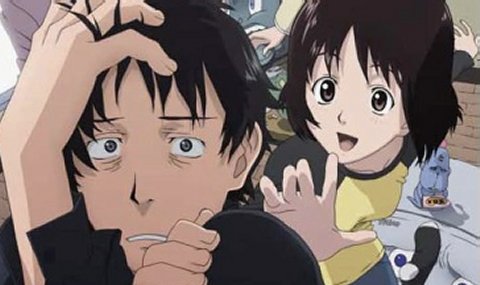
Welcome-to-the-NHKI’ve been in a fan of Japan and it’s culture for years. It’s absolutely fascinating to me. I’m, half way through watching the series ‘Welcome to the NHK’- an anime about the life of a ‘Hikikomori’ (social recluse) and ‘NEET’ (unemployed school leaver) called Tatsuhiro Satō. Not only is it a great stand-alone anime story and production, but I found myself totally able to relate and it made me realize I was also a Hikikomori. I isolate myself from society relying on income from parents or welfare, feeling unable to integrate into what society expects of me. It’s a term used widely in Japan, and is similar to AvPD (Avoidant Personality Disorder).

Not something to be proud of, but knowing there are millions of people in the same situation provides a degree of comfort. It’s easy for others to call people like this lazy losers, but personally speaking I don’t choose to be like this. I don’t want to experience so much social anxiety, negative thinking and feel the need to have to withdraw and not be able to function in the ‘real world’.

I also recognise the Japanese term ‘Parasite Single’- a single man (or woman) who’s still living with and becomes dependant on his parent’s beyond their late 20s in order to live a comfortable and less stressful life.

I wonder how one can cure themselves of these conditions/lifestyle habits?

Big 5 / OCEAN Personality test update

oceanTook another test on a different site and my results are as follows:

What aspects of personality does this tell me about?

There has been much research on how people describe others, and five major dimensions of human personality have been found. They are often referred to as the OCEAN model of personality, because of the acronym from the names of the five dimensions.

Openness to Experience/Intellect
High scorers tend to be original, creative, curious, complex; Low scorers tend to be conventional, down to earth, narrow interests, uncreative.
You are relatively open to new experiences.     (Your percentile: 65)
Conscientiousness
High scorers tend to be reliable, well-organized, self-disciplined, careful; Low scorers tend to be disorganized, undependable, negligent.
You are well-organized, and are reliable.     (Your percentile: 74)
Extraversion
High scorers tend to be sociable, friendly, fun loving, talkative; Low scorers tend to be introverted, reserved, inhibited, quiet.
You probably enjoy spending quiet time alone.     (Your percentile: 12)
Agreeableness
High scorers tend to be good natured, sympathetic, forgiving, courteous; Low scorers tend to be critical, rude, harsh, callous.
You find it easy to express irritation with others.     (Your percentile: 22)
Neuroticism
High scorers tend to be nervous, high-strung, insecure, worrying; Low scorers tend to be calm, relaxed, secure, hardy.
You tend to become anxious or nervous.     (Your percentile: 66)

What do the scores tell me?
In order to provide you with a meaningful comparison, the scores you received have been converted to “percentile scores.” This means that your personality score can be directly compared to another group of people who have also taken this personality test.The percentile scores show you where you score on the five personality dimensions relative to the comparison sample of other people who have taken this test on-line. In other words, your percentile scores indicate the percentage of people who score less than you on each dimension. For example, your Extraversion percentile score is 12, which means that about 12 percent of the people in our comparison sample are less extraverted than you — in other words, you are rather introverted. Keep in mind that these percentile scores are relative to our particular sample of people. Thus, your percentile scores may differ if you were compared to another sample (e.g., elderly British people).

I’m a O65-C74-E12-A22-N66 Big Five

My thoughts:

Seems pretty accurate. I would say I am original, creative, curious, complex as I’m also an INTJ on the MBTI and an artist, so not totally sure I agree with the score on that? The fact that I am not perhaps as ‘open’ to trying new experiences is due to the more powerful neurotic trait? Same goes for why I’m ‘introverted’ and why I’m ‘conscientious’- I do a good job because if not I worry I’ll get sacked or moaned at etc.

The “Disagreeable” factor is interesting.

I’ve often said if I were to ever date a girl, she would HAVE TO either share the same values or be very adaptable.
The fact the test proves I’m quite critical of differences by being a disagreeable personality says a lot and explains this opinion. Perhaps as well, the fact I am disagreeable makes it difficult to accept other’s opinions, other ways of doing things, and thus I have a much harder time in trying to achieve my goals of transforming my life? I don’t want to make excuses or use it as a reason to give up, but it does explain a few things.

I wonder if one can change such personality types and to what degree?

The INTJ Forum

intjforumI’ve been spending time visiting the INTJ Forum over the last year. I basically use it as a soundboard for any semi-intelligent opinions I might have. Most of the members are smart and I respect that. My intelligent side feels at home there 🙂 I can join in a really interesting, deep discussion about ‘Free will’ or debate the pros and cons of democracy with people able to post well thought out and valid arguments (most of the time). I’ve learned a lot there. It’s opened my mind up and helped me make better conclusions about the world. INTJs generally have quite strong opinions which are often very different yet also very valid. It’s such a refreshing contrast to typical dumb TV, celebrity gossip and the majority of people I’ve met and spoke to over my life time.

I want to add some of my posts and replies to the blog for reference. Also, sometimes I say something which, for me, is pretty fucking smart and I guess I’m kinda proud of such observations and statements 😀

What’s wrong with my brain?

There’s so many syndromes, mental disorders and ailments out there which I recognise and could be classed as. I’m sure pretty much every single human being has at least one or two! Here are a few I’ve identified of myself.

In order or relevance:

  1. Atypical Depression
  2. AvPD [Avoidant personality disorder]
  3. Atychiphobia [phobia of failure]
  4. Social Anxiety & Social Phobia
  5. Existential Anxiety
  6. Thanatophobia [phobia of death] 
  7. GAD [Generalized Anxiety Disorder]
  8. Eating Disorder
  9. Major / Clinical Depressive Disorder
  10. Dysthymia & Chronic Depression (Long term)
  11. Circadian Rhythm Disorder/s
  12. Mild Chronic Fatigue Syndrome
  13. SAD [Seasonal Effect Disorder]
  14. A small degree of OCD and Autism
  15. A small degree of Dependant Personality Disorder

I’m not a hypochondriac as there’s a lot of stuff I can’t really identify with. i.e.~
bi-polor depression, panic attacks, multiple personalities, the personality disorders: boarder line, antisocial, narcissistic, schizoid, PTS, body dysmorphic disorder, sleep disorders – to name a few.

I guess to have 15 items on a list like this is pretty worrying! Although for a lot of them you can’t have one without the other, so in actual fact you could say I’m only inflicted with 5 or 6 tops. Having this kinda insight is always a good start and makes me feel a little better to know I’m not the only person dealing with these problems. I’m sure there are a lot of people like me who have ended up isolating themselves and living a very limited lifestyle through no fault of their own. The moral do-gooder in me wants to support similar people! And also want to be supported in the same way as sufferers of more obvious mental health problems or physical conditions.

Perhaps these ailments are directly what’s been effecting my mood? I tried plotting out how I’ve been feeling recently, and this pretty much sums up recent years too! I want to get to that green state, but currently spending too much time well under a decent base mood, so will have a long way to go to get there! At least it’s insightful to see a visual representation of how I feel and in comparison with other people around me.

My Ranked Values

I can’t remember what site I pulled this survey from, but for the purpose of trying to understand myself better I attempted to put the following values in order of preference. It’s tricky when they’re all really important! This is where I’m at:

Enjoyment
To enjoy my work. To have fun doing it.

Friendship
To work with people I respect and to be respected by them

Family
To have time with my family

Personal Accomplishment
To achieve significant goals. To be involved in undertakings I believe personally are significant – whether or not they bring me recognition from others.

Expertness
To become a known and respected authority in what I do.

Prestige
To be seen by others as successful. To become well known. To obtain recognition and status in my chosen field.

Wisdom
To grow in understanding of myself, my personal calling and life’s real purpose. To grow in knowledge and practice my religious beliefs. To discern and do the will of God and find lasting meaning in what I do.

Independence
To have freedom of thought and action. To be able to act in terms of my own time
schedules and priorities.

Personal Development
To learn and to do challenging work that will help me grow, that will allow me to utilize my best talents and mature as a human being.

Integrity
To live and work in compliance with my personal moral standards. To be honest and acknowledge/stand up for my personal beliefs.

Creativity
To be innovative. To create new and better ways of doing things.

Security
To have a steady income that fully meets my family’s basic needs.

Wealth
To earn a great deal of money (i.e., well beyond my family’s basic needs). To be financially independent.

Health
To be physically and mentally fit.

Loyalty
To be committed to the goals of a group of people who share my beliefs, values and ethical principles.

Leadership
To motivate and energize other people. To feel responsible for identifying and
accomplishing needed group tasks.

Service
To contribute to the well-being and satisfaction of others. To help people who need help and improve society.

Community
To be deeply involved with a group that has a larger purpose beyond one’s self. To perform in effective and caring teamwork.

Location
To be able to live where I want to live.

Power
To have the authority to approve or disapprove proposed courses of action. To make assignments and control allocation of people and resources.

Mini Conclusion – Enjoyment at #1?

It’s funny how I put enjoyment at the top, and then when I look at my current, or even past situation I’m typically always doing things I like, even if they are destructive to my overall well-being! I might be tired and need to sleep, hungry and need to eat, I might have work that needs doing or an appointment that needs to be attended, but you know what takes priority? A box set TV series I wanna watch, and Xbox game I wanna play or some sites I wanna visit on the internet! There’s nothing wrong with those things, but it’s clear my sense of moderation and balance is completely screwed! I know I’m not alone. Millions of people “should” be out fixing their homes or at the gym sculpting their physique, but instead are watching TV, having pointless gossiping sessions with their friends or just wanking off to porn!

I definitely need to work on my sense of balance by getting my priorities straight. This is tough. There is no magic pill to suddenly reverse my thinking. I can’t instantly like the thought of working hard when I associate it with the years of abusing or negative self-talk:
* Telling myself it’s hard, it hurts
* It’s a waste of time
* I’m not doing it right/well enough and this makes me feel inferior
* I’ve not done it as well as other people and so I’m a failure
* It’s generally something shit taking up time which I could be using to do something fun!
The right idea is to be fully aware of and believing in to the positive aspects of work and then to consciously focus on them. So:
* This is working towards my long-term goals
* This will work towards putting me into better habits
* Without failure, I can’t learn
* This will make me feel great for achieving something
* This will make me feel like a worthwhile part of society and human, instead of being an indulgent loser

I’ll be honest- I still want to sit here all evening and be an indulgent loser rather than work on various projects, but at this stage, I just want to identify who I am and what I’m doing before trying to realign my values while I’m not I’m ready.
Wouldn’t it be great if I could find a way to enjoy the things I need to do instead of endure them?

I do think it may be possible to think of ‘going to the gym’ or ‘tackling a difficult work project’ while feeling the same sense of ease I get watching late night tv or the same sense of excitement from playing a great video game I’m hooked on! It’s probably a case of having the initial drive and then implementing some kind of NLP/CBT techniques? Its something I’d like to look in to.

SLOAN/ Global 5 / Big 5 – RLOEI

Big Five Test Results:

Extroversion |||||| 26%
Orderliness |||||||||||||||| 68%
Emotional Stability |||||| 22%
Accommodation |||||| 24%
Inquisitiveness |||||||||||||||| 62%

The Big Five is currently the most accepted personality model in the scientific community. The Big Five emerged from the work of multiple independent scientists/researchers starting in the 1950s who using different techniques obtained similar results. Those results were that there are five distinct personality traits/dimensions. Here are your results on each dimension:

Extroversion results were low which suggests you are very reclusive, quiet, unassertive, and private.

Orderliness results were moderately high which suggests you are, at times, overly organized, neat, structured and restrained at the expense too often of flexibility, variety, spontaneity, and fun.

Emotional Stability results were low which suggests you are very worrying, insecure, emotional, and anxious.

Accommodation results were low which suggests you are overly selfish, uncooperative, and difficult at the expense too often of the well being of others.

Inquisitiveness results were moderately high which suggests you are intellectual, curious, imaginative but possibly not very practical.

Your Global5/SLOAN type is RLOEI
Your Primary type is Limbic

Global 5: sloan RLOEI; sloan+ R|L|OEi; primary Limbic; R(74%)L(78%)O(68%)E(76%)I(62%)

“withdrawn, loner, moody, dislikes crowds, avoidant, not big on fun, socially unskilled, not that interested in others, overwhelmed by unpleasant feelings frequently, depressed, requires lots of time alone to recharge, socially awkward, hard to get to know, feels defective, averse to change, low self confidence, dislikes small talk, dislikes touchy feely types, private, not prone to complimenting others, driven by own personal gain, pessimistic, self absorbed, indifferent to the feelings of others, does not easily forgive, inflexible, skeptical, embarrassed easily, tense, lower energy level, attracted to things associated with sadness, very suspicious of others, does not believe in human goodness, interested in intellectual pursuits, does not put the welfare of others ahead of self, lonely, not known for generosity, unadventurous, doubting, quick to judge others, discontent, hard to understand, wounded at the core, believes in a logical answer for everything, worrying, uncooperative, agnostic/atheist tendencies, has anxiety, not physically affectionate with most people, feels second place is not good enough, frustrated when people don’t live up to expectations” – From SimilarMinds.com

Great! I sound like a barrel of fun!
Mind you all the other descriptions weren’t particularly positive. But like always, the positive extroverts came out top. Lucky SOBs!

Neuroticism and it’s effects on my life:

So I compared my results with those on the INTJ forum and while we all generally came out similar, there was one variable which fluctuated significantly- Emotional Stability. A reason I often find I can’t always relate to other INTJs, as well as being a little feely and quite perceiving is down to my negativity, neuroticism and anxiety!

It is, as I read, “the hidden injury”. I feel really upset when I think of just what I could have achieved if I was not plagued by a near constant feeling of worry. All these years of torture via constant unhappiness would have been gone. I would have been able to focus my time on productive things and have a social life rather than being put off by worries and fears. Who knows where I’d be with my life now? And I feel frustrated that I go through life without anyone knowing I have to live with a totally contaminated set of thoughts to most people, and even if they did know I’d get no sympathy or allowances. Perhaps that is why I can be so hard on other people- I have to live with depressive thoughts in my head EVERY DAY, so fuck you for wanting allowances for feeling under the weather, for breaking your arm, or for losing your leg!

How do I fix this? That is my mission.

Hearing Psychologists say their bit doesn’t help either!:

Daniel Nettle
High neuroticism scorers will always be vulnerable to negative thoughts and feelings. That they cannot change. However, there are techniques in which they can train themselves that seem to have quite a marked effect on how they deal with this vulnerability, which can make a great deal of difference to their being in the world

Timothy Pychyl:
While neurotics can learn to act out of character they can’t change their personalities.

That last statement sounds so true to me right now~ I’m went on a date today, acted relaxed, in control, assertive and pretty positive. Yet I felt none of those things on the inside. I told my date I don’t lie and this is me! It’s not. What I showed her was 25% me and 75% facade fabricated to not look like a complete loser, which is what I secretly am by most of society’s standards.

In some ways I’m not THAT bad- if I can go out and be 25% of the person I want to be, and at least I’m not in a psych hospital, or dead. When I’m engaged in something like a computer game or anime series I feel happy! It’s only after these things end that I have chance to reflect and worry that I’ve wasted my time or whatnot. But I don’t think I give myself enough credit. I have been SERIOUSLY ILL for a huge part of my life and have still soldiered on and even now I frantically search for an answer to my woes. I expect myself to not only be able to function and behave like normal people, but I expect to be considered better than most people, when perhaps I should be in a pysch hospital being looked after!

Enneagram Test Results

In addition to the MBTI I’ve been spending a lot of time recently trying to understand myself and personality. I took an Enneagram of Personality test which revealed the following stats:

Type 1 Perfectionism |||||||||||||||||| 71%
Type 2 Helpfulness |||||||||| 34%
Type 3 Image Focus |||||||||||||||| 62%
Type 4 Hypersensitivity |||||||||||||||| 67%
Type 5 Detachment |||||||||||||||||| 77%
Type 6 Anxiety |||||||||||||||||| 72%
Type 7 Adventurousness |||||| 24%
Type 8 Aggressiveness |||||| 24%
Type 9 Calmness |||||||||||| 45%

Type score type | behaviour | motivation
5 54 I must be knowledgeable and independent to be happy.
6 51 I must be secure and safe to be happy.
1 50 I must be perfect and good to be happy.
4 47 I must be unique/different to be happy.
3 44 I must be impressive and attractive to be happy.
9 32 I must maintian a peaceful and easygoing environment to be happy.
2 24 I must be helpful and caring to be happy.
7 17 I must be fun and entertained to be happy.
8 17 I must be strong and in control to be happy.

My three instincts in order are:

1. Self-Preservation (SP) – The instinct to secure basic resources and meet the needs of material and physical survival.
2. Social (SO) – The instinct to create lasting personal connections and secure one’s place in relationship to others.
3. Sexual (SX) – The instinct to seek intense, stimulating intimate connections, sexual and otherwise.

Therefore: I am a 5 with a heavy 6 ‘wing’ and an SP/SO/SX Instinctual Stack.

Although on another test I was a 5 with a heavy 4 ‘wing’ (or 4 with a heavy 5 ‘wing’). See below results. Like most personality tests, they’re never perfect.

Score Type

4 Type 1: The Reformer. The rational, idealistic type.
1 Type 2: The Helper. The caring, nurturing type.
4 Type 3: The Motivator. The adaptable, success-oriented type.
7 Type 4: The Artist. The intuitive, reserved type.
7 Type 5: The Thinker. The perceptive, cerebral type.
5 Type 6: The Skeptic. The committed, security-oriented type.
4 Type 7: The Generalist. The enthusiastic, productive type.
0 Type 8: The Leader. The powerful, aggressive type.
4 Type 9: The Peacemaker. The easygoing, accommodating type.

So I’m “The thinking artist!” Lol. I’d agree with that! Apparently I need to balance out myself with more Type 8 traits and the fact I scored 0 for that type could explain my depression? If I was more assertive, allow myself to enjoy life, support those close to me, be a leader then perhaps I would be happier?The test seems to allow more diversity than the MBTI and touches on facets like sexual instinct. One point about personality tests: Its very difficult to answer these kinda tests truthfully. Most people don’t know themselves well enough or put what they think they should rather than what is true. I’ve sat down with family who who answer questions completely differently to how the rest of us know them to be.In general for any kind of questionnaire, formulating a set of questions which does not discriminate or make a person feel bad for answering one way or the other is key to unlocking truths. Although I’m an INTJ type, I still don’t like admitting I have preferences towards things which society deems as negative, like being too nerdy. Not an issue if you are confident in your skin, but not all of us are and don’t like to admit the truth about themselves.