
Ocean / Big 5 Personality Model – Old and New

Re-took the test 6 years later. Seems my personality has changed.

Openness to Experience/Intellect

High scorers tend to be original, creative, curious, complex; Low scorers tend to be conventional, down to earth, narrow interests, uncreative.
You are relatively open to new experiences.         

(Your percentile: 65 on 2.4.12)
(Your percentile: 72 on 10.3.18)

Conscientiousness

High scorers tend to be reliable, well-organized, self-disciplined, careful; Low scorers tend to be disorganized, undependable, negligent.
You are well-organized, and are reliable.

(Your percentile: 74 on 2.4.12)
(Your percentile: 76 on 10.3.18)

Extraversion

High scorers tend to be sociable, friendly, fun loving, talkative; Low scorers tend to be introverted, reserved, inhibited, quiet.
You probably enjoy spending quiet time alone.

(Your percentile: 12 on 2.4.12)
(Your percentile: 6 on 10.3.18)

Agreeableness

High scorers tend to be good natured, sympathetic, forgiving, courteous; Low scorers tend to be critical, rude, harsh, callous.
You find it easy to express irritation with others.

(Your percentile: 22 on 2.4.12)
(Your percentile: 25 on 10.3.18)

Neuroticism

High scorers tend to be nervous, high-strung, insecure, worrying; Low scorers tend to be calm, relaxed, secure, hardy.
You tend to become anxious or nervous.

(Your percentile: 66 on 2.4.12)
(Your percentile: 97 on 10.3.18)

Conclusion:

Seems pretty accurate, I’d agree I’m more curious, creative and and intelligent now than I was years ago. A good thing since your brain is supposed to start degrading after your prime years in your early 20s.

I was pretty introvert to begin with and am seemingly more so now. I guess because I’ve spent years getting used to being alone and perhaps growing comfortable with my own company. Perhaps because I worry more, and going out where there’s lots of people around is just too stressful to bother with so I’ve withdrawn some?

But the significant change is obviously the neuroticism. I thought it was bad before but this is just ridiculous! At the same time, it makes sense- I’m constantly depressed, describing myself as someone with ‘Atypical Depression’ (chronic Major depression) and someone who is extremely stress-sensitive. What sucks is, despite my efforts to change over the past 15 years, my personality has remained is pretty ridged, and I find myself in a world which is simply not designed around someone with my mental constituents. Why couldn’t I be more extrovert, more agreeable, less neurotic? Seems people like that get to breeze through life while I must struggle and suffer. It’s frustrating to say “for me life is harder than for everyone else” – sounds like I’m weak or making excuses for being lazy or not putting in effort, but that’s simply not the case. Every day is filled with as much effort as I can muster to better my situation. But there are limits on my effort, energy output and I only have so much time in the day. It also feels like I’m working with an extremely insufficient tool-set. Like a car mechanic that must make do with just a single set of spanners in order to fix an engine.

I would think, for most people, my outlook on life would be completely beyond their comprehension. I would ask them, imagine:

  • Finding very limited enjoyment in anything.
  • Feeling afraid to leave the house and deal with other people
  • Not being able to work a regular job, having to segregate yourself to your home for 90-95% of your existence
  • The work you do at home being massively stressful – putting you on the verge of tears every time you think about starting it or regularly feeling so frustrated with it that you want to throw your computer out the window, then have the ground swallow you up.
  • Feeling that despite giving it 110% effort, you’re able to earn only one fifth of your country’s the average annual salary therefore not cover living expenses.
  • Therefore knowing that normal things you crave, like living in your own home, progressing with relationships, having kids and raising a family is an impossibility.
  • Eating being a hardship- food mostly tasting like eating sand and cardboard
  • Having to sleep 9-10+ hours then feeling tired throughout the day
  • Exercise and working out feeling so exhausting and mentally painful that you often want to cry half way through a session.
  • Feeling insanely guilty that you’re not successful or doing enough despite your best efforts
  • Having few or no good friends you can rely on and feeling alone way too often- even if people are with you, they cannot understand how you feel.
  • Seeing no hope of things improving. Not having a clue how to improve things after having invested massive time and efforts to change things over the years.
  • Virtually nothing to look forward to in life.
  • Dealing with chronic back pain
  • Dealing with chronic eye pain which limits screen time/work time.
  • Dealing with constant chest infections
  • The constant looming presence of existential anxiety

Even if they could imagine, their response would probably be, “well, if I felt those things, this is what I would do…”. But this is the trouble- I am not them! If I was, I wouldn’t have ended up as I am! A part of me doesn’t was to admit defeat, but it seems this is it… This is my life and I have to just carry on dealing with it as best I can. Unfortunately I was dealt a shitty hand I just have to make the best of it.

Highly Sensitive Person: Traits

22 empath traits that might suggest you are a HSP:

1. People point it out

You’ve been told all your life you are too sensitive, overly emotional, or wear your heart on your sleeve. People tell you that you pick up on cues or feelings they don’t even notice.

2. You feel other’s feelings

You’ve noticed how sensitive you are to the emotions of others. Even before they tell you how they are feeling, you already know. You can enter a room and have a sense of the general mood of the environment.

3. Negativity overwhelms you

Where others can tolerate raised voices, conflict, or anger, it sends you over the edge. You almost feel physically sick or in pain as a result of the negative energy around you. You crave peace and calm.

4. Being in crowded places overwhelms you

You don’t like being in malls, sporting events, airports or other public places with crowds of people. You feel suffocated and overly-excited. You can’t wait to leave.

5. Strong intuition

You seem to know things without being told. You sense what needs to be done or what’s about to happen. Your gut feelings nearly always prove to be correct.

6. Pain intolerance

More than others you know, you have a lower threshold for pain tolerance. You can’t stand getting shots, feeling nauseated, or dealing with a minor injury. You may even have had a doctor tell you to stop complaining so much.

7. You must have alone time

You need time every day with no sensory input. You want to withdraw to your room or another quiet place to recharge.

8. You avoid negative media images

You find it extremely disturbing to watch or read about tragic news events or see unpleasant images. It bothers you so much, you avoid looking at these images at all costs.

9. You can easily tell when someone is lying

All you need to do is look at their faces or listen to their tone of voice, and you know instantly whether or not they are telling the truth.

10. You are more sensitive to stimulants/medications

Caffeine in particular makes you more anxious and agitated than the average person. You can never drink caffeine in the evening if you want to sleep. You often have reactions or side effects to medications.

11. You often show up with the symptoms of those around you

If someone close to you is sick or depressed, you will develop the same ailments.

12. You frequently have lower back and digestive problems

These are the result of dealing with negative and stressful situations and people. Your feelings show up as these physical symptoms.

13. You are the dumping ground for the problems of others

People around you seem to gravitate toward you and unload all of their pain and problems on you. Because you are an empath, you feel compelled to help, even to your own detriment.

14. You often feel fatigued

Because others take so much from you, you often feel drained of energy and extremely tired. You might even have chronic fatigue syndrome.

15. You have a very vibrant inner life

You are highly creative, imaginative, and loving. You may be involved in the arts or other creative pursuits. You feel close to animals and especially enjoy your relationship with your pets.

16. You are sensitive to sounds and sensory feelings

Loud noises or sudden dramatic movements startle you. You also feel overwhelmed by bright lights, rough fabrics, and strong smells. You also notice very delicate smells, touch, and sounds.

17. You don’t like too many things at once

When you have to multi-task or have too much coming at you at once, you feel rattled and overwhelmed.

18. You manage your environment

You create your living and working environment to accommodate your sensitivities. You arrange your schedule and commitments to avoid unpleasant, chaotic, or overly stimulating situations.

19. You don’t like narcissists

You are particularly bothered by people who put themselves first all the time and aren’t sensitive to the feelings of others.  You may even believe there’s something wrong with you or that you have some kind of emotional disorder.

20. You can almost feel the days of the week

Each day of the week has a specific “feel” to it. You notice when a Wednesday feels like a Saturday. You feel particularly heavy at the start of the work week. Even months and seasons have a particular feel.

21. You are a great listener

People tell you this all the time. You listen consciously and know the right questions and comments to draw people out and make them feel heard.

22. You get bored easily

As an empath, you need to focus on work and activities that stimulate your creativity and passion. If you get bored, you resort to daydreaming, doodling, etc. However, you are still very conscientious and try hard to avoid making mistakes

For me, I can totally relate to nearly all of these. 4 outta 5 people will never understand me. I am pissed off because I don’t want to be like this..! But I am, I’ve been like this all my life. No one chooses their genetics. All you can do is play out the hand you’ve been dealt to the best of your ability… And that is what I am doing. My concern now is how I can adapt my life to accommodate my traits. Use my traits to my advantage and succeed in life.

Thoughts about positivity and anxiety

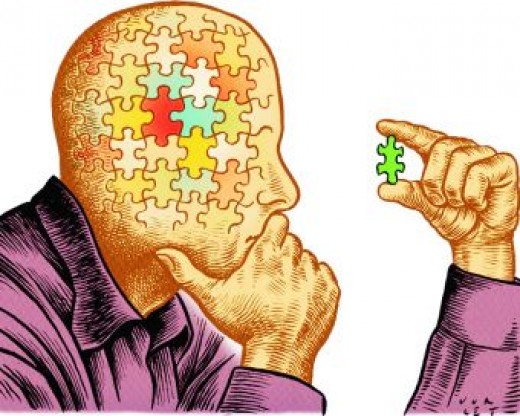
mind puzzleI’d taken a lot of time out from my self development. Life got in the way and I got busy.

Today I sat down to watch a TV Documentary about personalities. It explained theories about why some people are more stressed and anxious than others and how anxiety levels can be changed through mindful meditation and conscious positive focus exercises.

It was another sound bit of proof which contributes to the whole “you get what you focus on in life” theory. Look for the positive and you’ll get it, look for the negative and you’ll get it.

I really want to be more positive and less anxious, but perhaps there’s some kinda reasoning going on in my head which makes me continue worrying about the potential negative rather than instead focusing on the possible positive outcomes. Perhaps subconsciously I don’t want to adjust my mindset?
I would guess my brain thinks that anxiety and negative thinking helps: prepare me better for negative outcome, lets me plan for future events better, the added pressure I give myself can motivate me to avoid potential bad scenarios, allows me to see a more balance view of reality, pushes me to keep standards as high as possible.

Perhaps I secretly fear I would lose the above benefits if I were to be a blind, fuzzy-headed optimist?

OR perhaps my sense of self is too wrapped up in the whole anxiety thing? Maybe leaving a part of myself behind would fuck with my ideas of who I am, my sense of self and leave me without a identity I recognize – This could be one of the biggest obstacles in tackling mental health issues or bad thinking habits or habits in general.

I’m conflicted. I keep fluctuating between valuing happiness as the ultimate goal and maintaining a realistic and balanced view of the world. Can a blind optimist be objective and realistic? Happiness on it’s own won’t put food on the table, prepare me for the future and allow me to survive in an uncertain world. Then again, perhaps being a happier person will be the catalyst for life changes that will allow me to gain more than ever before?

Perhaps when I am ready, I can begin mindful meditation and conscious positive focus exercises with the hope that it will lead me to a better existence?

Big 5 / OCEAN Personality test update

oceanTook another test on a different site and my results are as follows:

What aspects of personality does this tell me about?

There has been much research on how people describe others, and five major dimensions of human personality have been found. They are often referred to as the OCEAN model of personality, because of the acronym from the names of the five dimensions.

Openness to Experience/Intellect
High scorers tend to be original, creative, curious, complex; Low scorers tend to be conventional, down to earth, narrow interests, uncreative.
You are relatively open to new experiences.     (Your percentile: 65)
Conscientiousness
High scorers tend to be reliable, well-organized, self-disciplined, careful; Low scorers tend to be disorganized, undependable, negligent.
You are well-organized, and are reliable.     (Your percentile: 74)
Extraversion
High scorers tend to be sociable, friendly, fun loving, talkative; Low scorers tend to be introverted, reserved, inhibited, quiet.
You probably enjoy spending quiet time alone.     (Your percentile: 12)
Agreeableness
High scorers tend to be good natured, sympathetic, forgiving, courteous; Low scorers tend to be critical, rude, harsh, callous.
You find it easy to express irritation with others.     (Your percentile: 22)
Neuroticism
High scorers tend to be nervous, high-strung, insecure, worrying; Low scorers tend to be calm, relaxed, secure, hardy.
You tend to become anxious or nervous.     (Your percentile: 66)

What do the scores tell me?
In order to provide you with a meaningful comparison, the scores you received have been converted to “percentile scores.” This means that your personality score can be directly compared to another group of people who have also taken this personality test.The percentile scores show you where you score on the five personality dimensions relative to the comparison sample of other people who have taken this test on-line. In other words, your percentile scores indicate the percentage of people who score less than you on each dimension. For example, your Extraversion percentile score is 12, which means that about 12 percent of the people in our comparison sample are less extraverted than you — in other words, you are rather introverted. Keep in mind that these percentile scores are relative to our particular sample of people. Thus, your percentile scores may differ if you were compared to another sample (e.g., elderly British people).

I’m a O65-C74-E12-A22-N66 Big Five

My thoughts:

Seems pretty accurate. I would say I am original, creative, curious, complex as I’m also an INTJ on the MBTI and an artist, so not totally sure I agree with the score on that? The fact that I am not perhaps as ‘open’ to trying new experiences is due to the more powerful neurotic trait? Same goes for why I’m ‘introverted’ and why I’m ‘conscientious’- I do a good job because if not I worry I’ll get sacked or moaned at etc.

The “Disagreeable” factor is interesting.

I’ve often said if I were to ever date a girl, she would HAVE TO either share the same values or be very adaptable.
The fact the test proves I’m quite critical of differences by being a disagreeable personality says a lot and explains this opinion. Perhaps as well, the fact I am disagreeable makes it difficult to accept other’s opinions, other ways of doing things, and thus I have a much harder time in trying to achieve my goals of transforming my life? I don’t want to make excuses or use it as a reason to give up, but it does explain a few things.

I wonder if one can change such personality types and to what degree?

The INTJ Forum

intjforumI’ve been spending time visiting the INTJ Forum over the last year. I basically use it as a soundboard for any semi-intelligent opinions I might have. Most of the members are smart and I respect that. My intelligent side feels at home there 🙂 I can join in a really interesting, deep discussion about ‘Free will’ or debate the pros and cons of democracy with people able to post well thought out and valid arguments (most of the time). I’ve learned a lot there. It’s opened my mind up and helped me make better conclusions about the world. INTJs generally have quite strong opinions which are often very different yet also very valid. It’s such a refreshing contrast to typical dumb TV, celebrity gossip and the majority of people I’ve met and spoke to over my life time.

I want to add some of my posts and replies to the blog for reference. Also, sometimes I say something which, for me, is pretty fucking smart and I guess I’m kinda proud of such observations and statements 😀

SLOAN/ Global 5 / Big 5 – RLOEI

Big Five Test Results:

Extroversion |||||| 26%
Orderliness |||||||||||||||| 68%
Emotional Stability |||||| 22%
Accommodation |||||| 24%
Inquisitiveness |||||||||||||||| 62%

The Big Five is currently the most accepted personality model in the scientific community. The Big Five emerged from the work of multiple independent scientists/researchers starting in the 1950s who using different techniques obtained similar results. Those results were that there are five distinct personality traits/dimensions. Here are your results on each dimension:

Extroversion results were low which suggests you are very reclusive, quiet, unassertive, and private.

Orderliness results were moderately high which suggests you are, at times, overly organized, neat, structured and restrained at the expense too often of flexibility, variety, spontaneity, and fun.

Emotional Stability results were low which suggests you are very worrying, insecure, emotional, and anxious.

Accommodation results were low which suggests you are overly selfish, uncooperative, and difficult at the expense too often of the well being of others.

Inquisitiveness results were moderately high which suggests you are intellectual, curious, imaginative but possibly not very practical.

Your Global5/SLOAN type is RLOEI
Your Primary type is Limbic

Global 5: sloan RLOEI; sloan+ R|L|OEi; primary Limbic; R(74%)L(78%)O(68%)E(76%)I(62%)

“withdrawn, loner, moody, dislikes crowds, avoidant, not big on fun, socially unskilled, not that interested in others, overwhelmed by unpleasant feelings frequently, depressed, requires lots of time alone to recharge, socially awkward, hard to get to know, feels defective, averse to change, low self confidence, dislikes small talk, dislikes touchy feely types, private, not prone to complimenting others, driven by own personal gain, pessimistic, self absorbed, indifferent to the feelings of others, does not easily forgive, inflexible, skeptical, embarrassed easily, tense, lower energy level, attracted to things associated with sadness, very suspicious of others, does not believe in human goodness, interested in intellectual pursuits, does not put the welfare of others ahead of self, lonely, not known for generosity, unadventurous, doubting, quick to judge others, discontent, hard to understand, wounded at the core, believes in a logical answer for everything, worrying, uncooperative, agnostic/atheist tendencies, has anxiety, not physically affectionate with most people, feels second place is not good enough, frustrated when people don’t live up to expectations” – From SimilarMinds.com

Great! I sound like a barrel of fun!
Mind you all the other descriptions weren’t particularly positive. But like always, the positive extroverts came out top. Lucky SOBs!

Neuroticism and it’s effects on my life:

So I compared my results with those on the INTJ forum and while we all generally came out similar, there was one variable which fluctuated significantly- Emotional Stability. A reason I often find I can’t always relate to other INTJs, as well as being a little feely and quite perceiving is down to my negativity, neuroticism and anxiety!

It is, as I read, “the hidden injury”. I feel really upset when I think of just what I could have achieved if I was not plagued by a near constant feeling of worry. All these years of torture via constant unhappiness would have been gone. I would have been able to focus my time on productive things and have a social life rather than being put off by worries and fears. Who knows where I’d be with my life now? And I feel frustrated that I go through life without anyone knowing I have to live with a totally contaminated set of thoughts to most people, and even if they did know I’d get no sympathy or allowances. Perhaps that is why I can be so hard on other people- I have to live with depressive thoughts in my head EVERY DAY, so fuck you for wanting allowances for feeling under the weather, for breaking your arm, or for losing your leg!

How do I fix this? That is my mission.

Hearing Psychologists say their bit doesn’t help either!:

Daniel Nettle
High neuroticism scorers will always be vulnerable to negative thoughts and feelings. That they cannot change. However, there are techniques in which they can train themselves that seem to have quite a marked effect on how they deal with this vulnerability, which can make a great deal of difference to their being in the world

Timothy Pychyl:
While neurotics can learn to act out of character they can’t change their personalities.

That last statement sounds so true to me right now~ I’m went on a date today, acted relaxed, in control, assertive and pretty positive. Yet I felt none of those things on the inside. I told my date I don’t lie and this is me! It’s not. What I showed her was 25% me and 75% facade fabricated to not look like a complete loser, which is what I secretly am by most of society’s standards.

In some ways I’m not THAT bad- if I can go out and be 25% of the person I want to be, and at least I’m not in a psych hospital, or dead. When I’m engaged in something like a computer game or anime series I feel happy! It’s only after these things end that I have chance to reflect and worry that I’ve wasted my time or whatnot. But I don’t think I give myself enough credit. I have been SERIOUSLY ILL for a huge part of my life and have still soldiered on and even now I frantically search for an answer to my woes. I expect myself to not only be able to function and behave like normal people, but I expect to be considered better than most people, when perhaps I should be in a pysch hospital being looked after!

Enneagram Test Results

In addition to the MBTI I’ve been spending a lot of time recently trying to understand myself and personality. I took an Enneagram of Personality test which revealed the following stats:

Type 1 Perfectionism |||||||||||||||||| 71%
Type 2 Helpfulness |||||||||| 34%
Type 3 Image Focus |||||||||||||||| 62%
Type 4 Hypersensitivity |||||||||||||||| 67%
Type 5 Detachment |||||||||||||||||| 77%
Type 6 Anxiety |||||||||||||||||| 72%
Type 7 Adventurousness |||||| 24%
Type 8 Aggressiveness |||||| 24%
Type 9 Calmness |||||||||||| 45%

Type score type | behaviour | motivation
5 54 I must be knowledgeable and independent to be happy.
6 51 I must be secure and safe to be happy.
1 50 I must be perfect and good to be happy.
4 47 I must be unique/different to be happy.
3 44 I must be impressive and attractive to be happy.
9 32 I must maintian a peaceful and easygoing environment to be happy.
2 24 I must be helpful and caring to be happy.
7 17 I must be fun and entertained to be happy.
8 17 I must be strong and in control to be happy.

My three instincts in order are:

1. Self-Preservation (SP) – The instinct to secure basic resources and meet the needs of material and physical survival.
2. Social (SO) – The instinct to create lasting personal connections and secure one’s place in relationship to others.
3. Sexual (SX) – The instinct to seek intense, stimulating intimate connections, sexual and otherwise.

Therefore: I am a 5 with a heavy 6 ‘wing’ and an SP/SO/SX Instinctual Stack.

Although on another test I was a 5 with a heavy 4 ‘wing’ (or 4 with a heavy 5 ‘wing’). See below results. Like most personality tests, they’re never perfect.

Score Type

4 Type 1: The Reformer. The rational, idealistic type.
1 Type 2: The Helper. The caring, nurturing type.
4 Type 3: The Motivator. The adaptable, success-oriented type.
7 Type 4: The Artist. The intuitive, reserved type.
7 Type 5: The Thinker. The perceptive, cerebral type.
5 Type 6: The Skeptic. The committed, security-oriented type.
4 Type 7: The Generalist. The enthusiastic, productive type.
0 Type 8: The Leader. The powerful, aggressive type.
4 Type 9: The Peacemaker. The easygoing, accommodating type.

So I’m “The thinking artist!” Lol. I’d agree with that! Apparently I need to balance out myself with more Type 8 traits and the fact I scored 0 for that type could explain my depression? If I was more assertive, allow myself to enjoy life, support those close to me, be a leader then perhaps I would be happier?The test seems to allow more diversity than the MBTI and touches on facets like sexual instinct. One point about personality tests: Its very difficult to answer these kinda tests truthfully. Most people don’t know themselves well enough or put what they think they should rather than what is true. I’ve sat down with family who who answer questions completely differently to how the rest of us know them to be.In general for any kind of questionnaire, formulating a set of questions which does not discriminate or make a person feel bad for answering one way or the other is key to unlocking truths. Although I’m an INTJ type, I still don’t like admitting I have preferences towards things which society deems as negative, like being too nerdy. Not an issue if you are confident in your skin, but not all of us are and don’t like to admit the truth about themselves.

MBTI – Personality Test says I’m an INTJ

The Myers-Briggs Type Indicator suggests I am an INTJ (Or, as I prefer and later discovered, an INtj with the T and J parts not being as distinct)
INTJ stands for Introverted, Intuitive, Thinking, Judging and basically describes how I think and view the world. So in other words, I get my energies more from being alone than with people, I am analytical and observational rather than instinctual, I value rational thought more than feelings, I make judgements more than keeping my opinions open. That doesn’t paint the full picture, but you get the idea! Some might describe INJTs and “cold geniuses” opposed to “bubbly drama queen”, which you might get from, say, an ESFJ.
My MBTI personality type has advantages, but also disadvantages. I’m hoping that by having them highlighted I will be able to better understand myself and other people, and thus make my life a little easier.
Descriptions about INTJs on the net sum me up pretty well and in a way it saddens me that I apparently am not capable of thinking outwardly or emotionally like most people. I am self obsessed by definition and in reality it’s true! It’s not that I am like that because I am bad and choose to be, but I am like that because it’s the core personality I was (perhaps) born with. There’s little I can do about it despite my efforts and good intentions.
I wonder about all the automatic responses I have to things and the way I go about communicating…
For example, it is true that many men have difficulties with the ladies, but the fact that I so far have felt totally incapable of flirting must be putting me at a big added disadvantage! For some girls, flirting and banter is imperative, and if am a naturally bad ‘socializer’, I will be disregarded way before I’ve even been given the opportunity to show my strengths. It sucks.
In fact last year I saw my MBTI result as a large reason why I have been depressed. It was only after discovering the INTJ Forum that I realized not all INTJs are depressed, and not all are alike in many other ways. My INTJ-ness is certainly a part of my problem but I’ve concluded it’s only a problem when combined with a neurotic trait- something which the Global 5/ Big 5/ SLOAN personality indicator covers. I’ll go into more detail about that later 🙂
